❦ Save Bhimashankar

Live issue · October 2026

#SaveSahyadriSave Bhimashankar

A cloud forest on the crest of the Sahyadri, the birthplace of the Bhima river, the home of Maharashtra's state animal. And about 15 km down the same escarpment, 32,490 trees have been cleared for felling.

130.78km² sanctuary
1985notified
1,142flowering plants
32,490trees at stake
scroll to fly
Shekru✦Sahyadri✦Sacred groves✦Western Ghats✦Bhima river✦Cloud forest✦Fireflies✦Hornbills✦Shekru✦Sahyadri✦Sacred groves✦Western Ghats✦Bhima river✦Cloud forest✦Fireflies✦Hornbills✦

In brief · 30 seconds

What is happening?

🌳

What

At Saidongar in Karjat taluka (Raigad), about 15 km south-west of Bhimashankar sanctuary, the Forest Department has permitted the felling of 32,490 trees on 233 ha of forest land for a 3,000 MW pumped-storage power project. About 1,800–2,700 had been cut before felling was paused on 26–27 Oct.

💧

Why it matters

The project's own environmental report records leopards, sloth bears, pangolins and sambar here. This forest is the catchment of the Pej, a tributary of the Ulhas, and it holds landslide-prone Sahyadri slopes together. Adivasi hamlets live in and around it.

⚖️

The dispute

Government and company: the site is outside the sanctuary, all clearances are in place, the project is green, and 90,000 trees will be planted. Citizens: Sahyadri forest doesn't stop at a line — publish the studies and hear the people first. Some groups say they are approaching the National Green Tribunal.

✍️

What you can do

Sign the petition, send the ready-made letter to the government, and share this story on WhatsApp.

Sign now →
Understand it in detail: map, project, FAQ ↓
● RECALT ~1,000 m19.07° N · 73.54° E

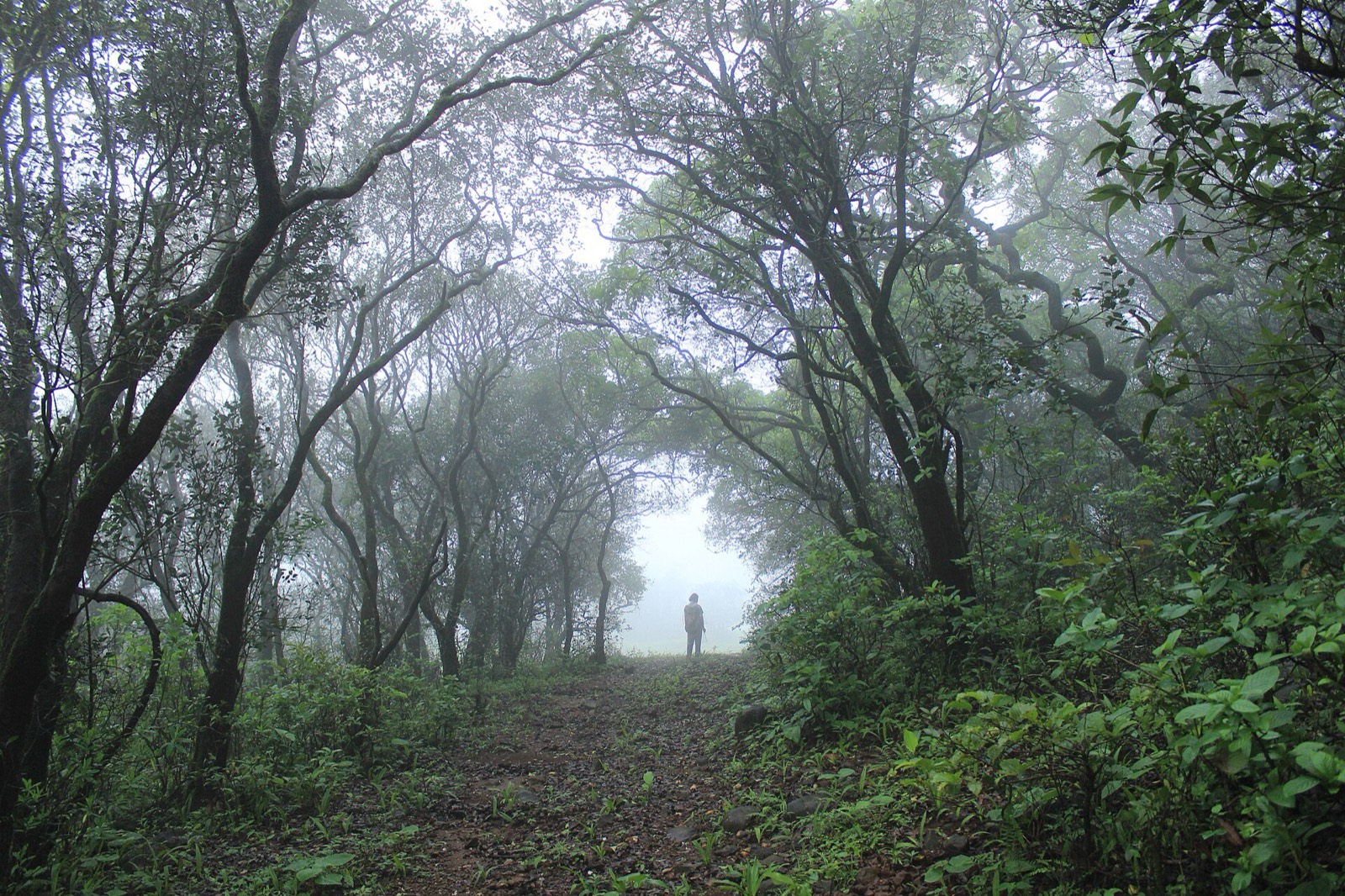
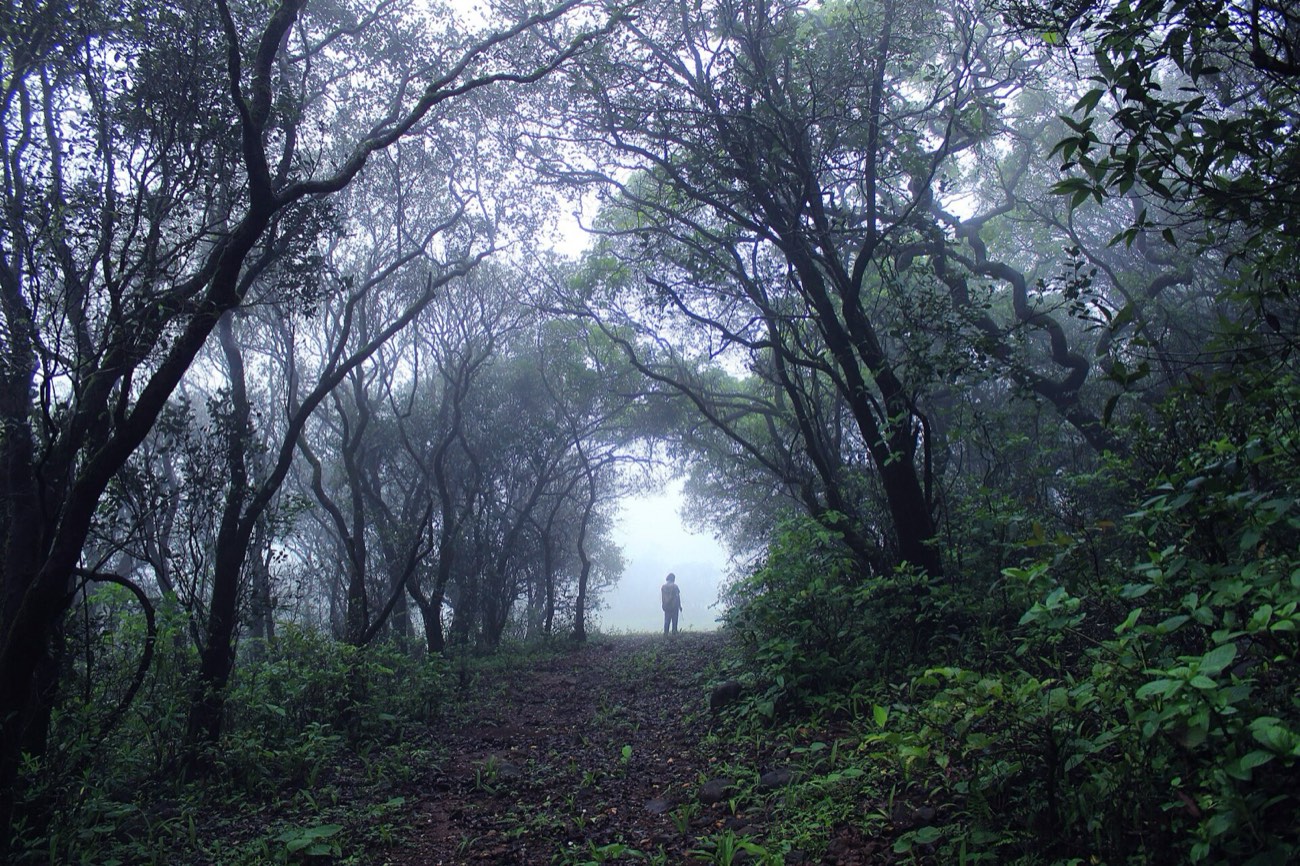
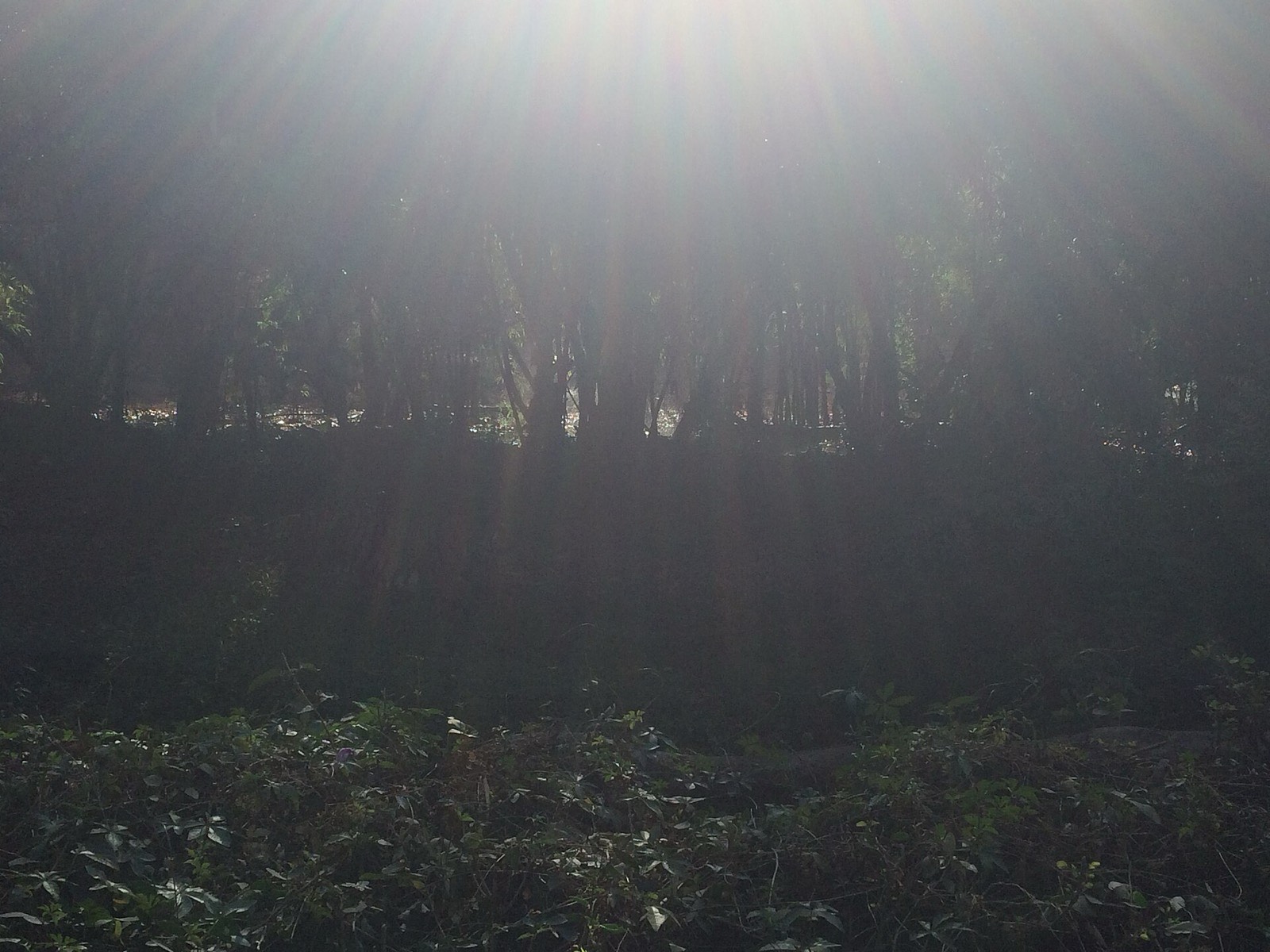
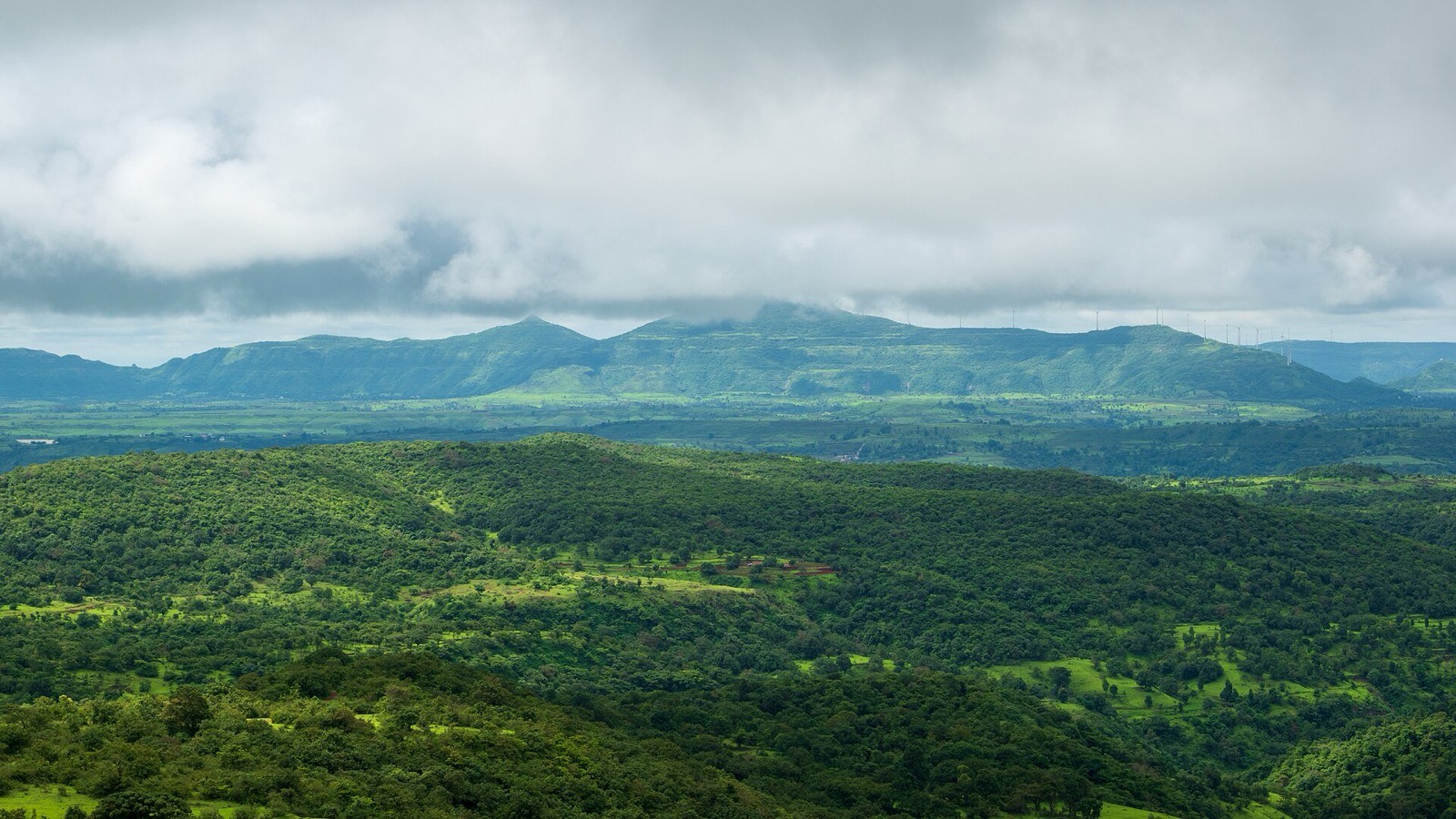
High on the crest of the Western Ghats, where the Deccan plateau suddenly falls away to the Konkan coast, there is a forest that makes its own weather.

For four months of monsoon, clouds sit inside the trees. Moss and orchids cover every branch. When the clouds lift, the Bhima river trickles out of these hills and begins a ~860-km journey east to the Krishna.

To protect this place, and the giant squirrel that lives in its canopy, the Government of Maharashtra notified the Bhimashankar Wildlife Sanctuary in 1985 (state notification of 16 September 1985). It spreads across Ambegaon and Khed talukas of Pune district, reaching into Thane and Raigad.

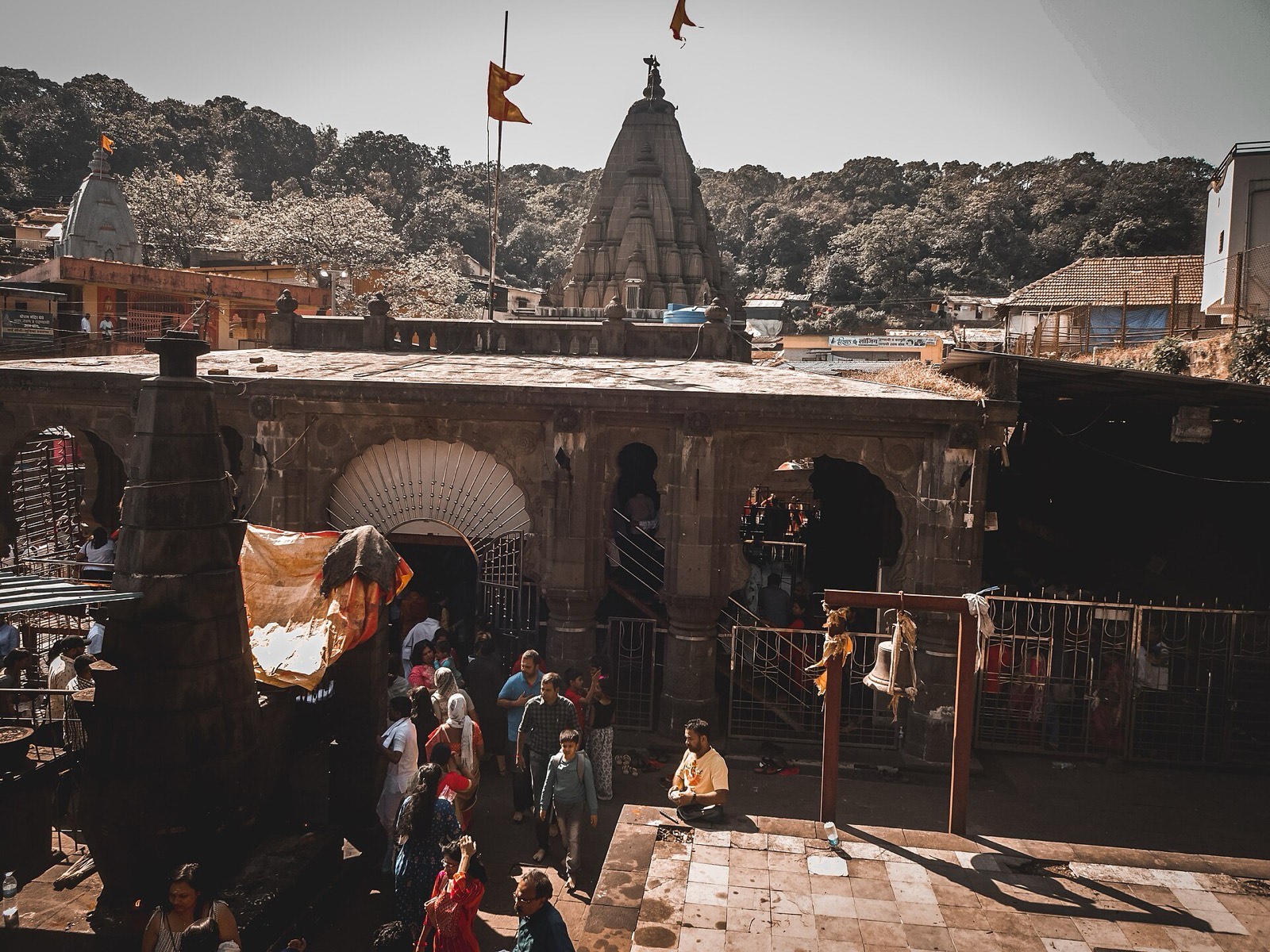
At its heart stands the Bhimashankar temple, one of the twelve Jyotirlingas, so this forest was sacred to millions long before it was a "sanctuary" on a map.

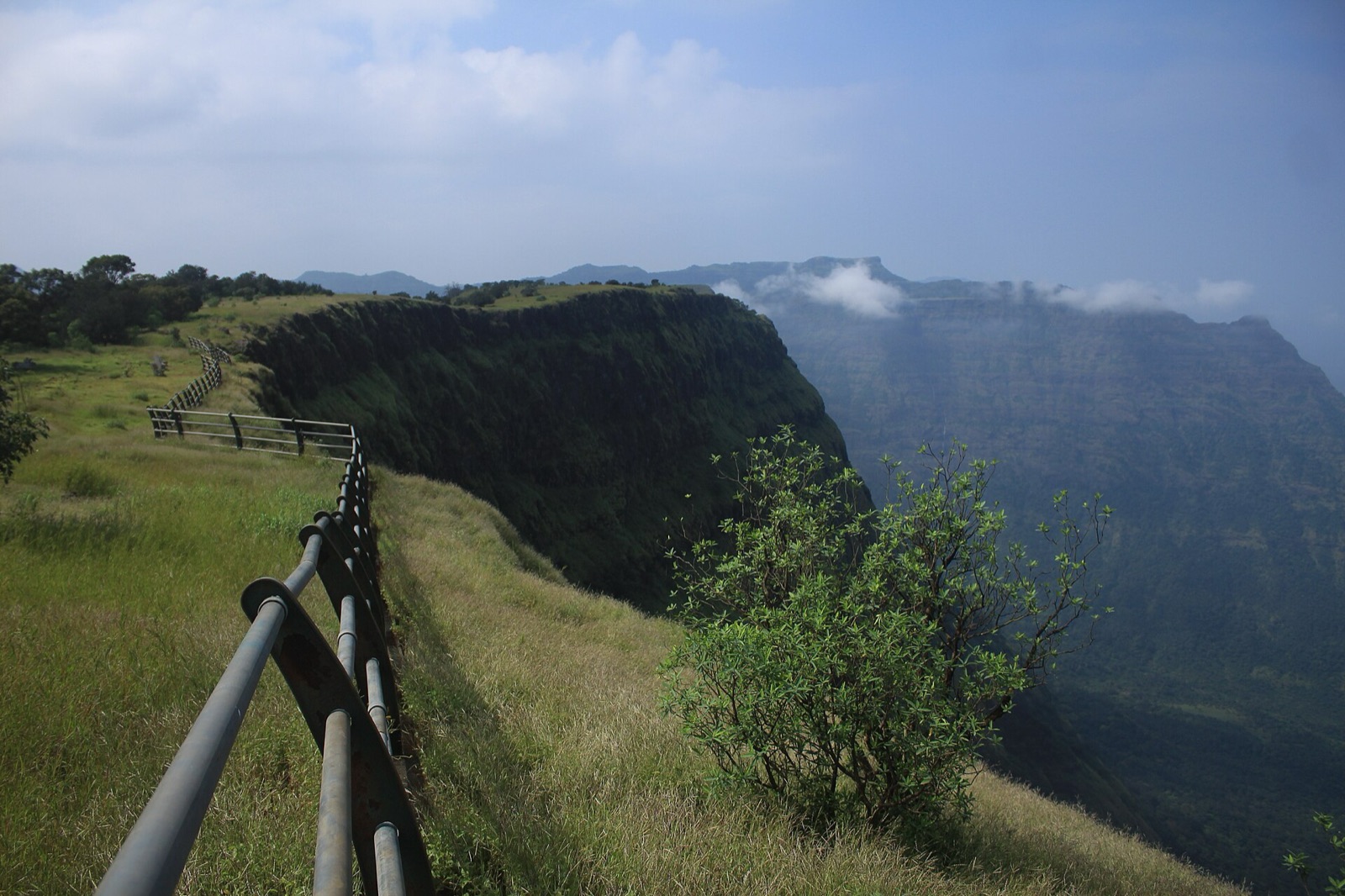
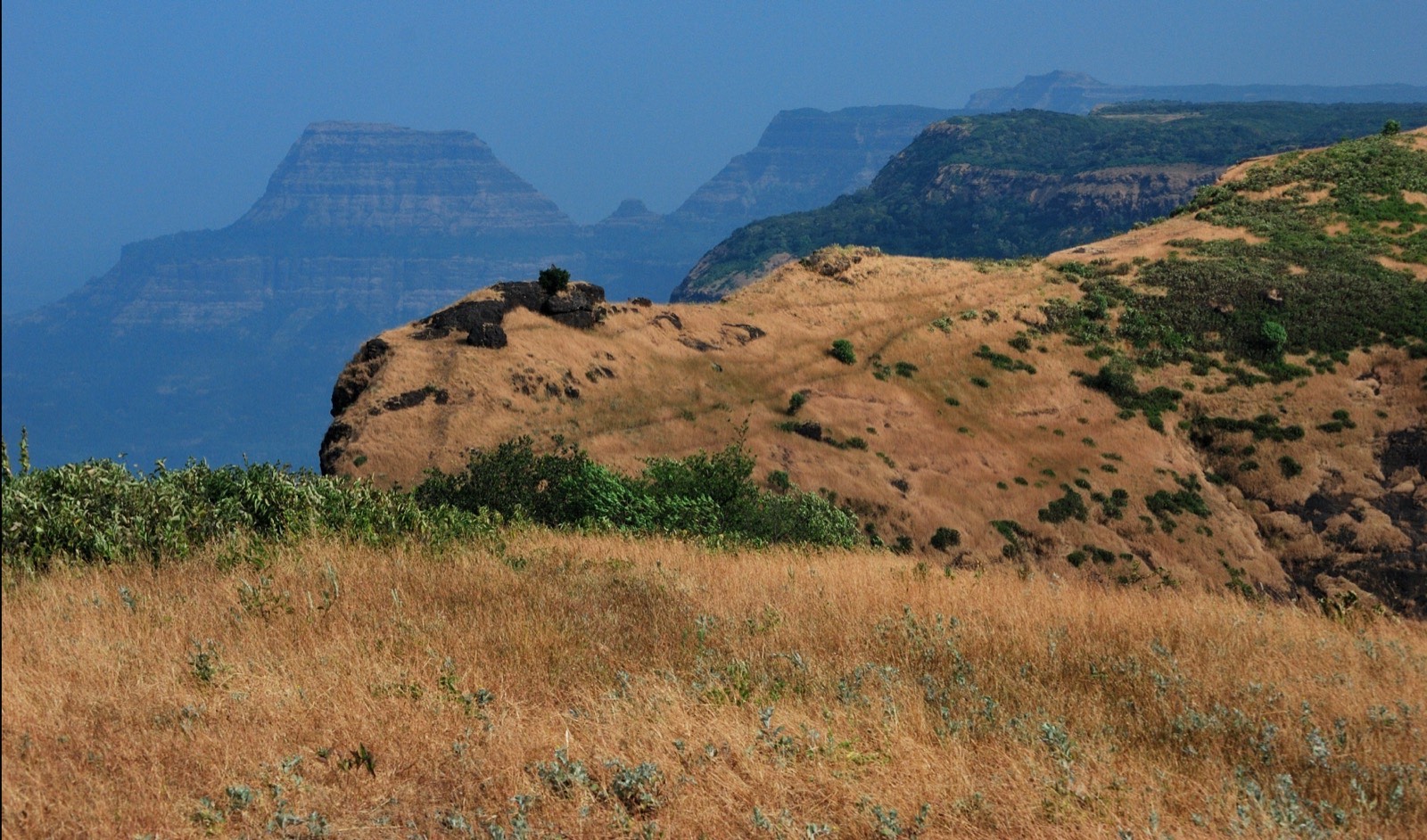
The escarpment — the Deccan ends, the Konkan begins.
Bhimashankar Jyotirlinga.
130.78 km²protected area
Western Ghatsglobal biodiversity hotspot
9tribal villages inside
14sacred groves (devrai)

Chapter 02

The reason it exists: Shekru

Shekru · Maharashtra's state animal

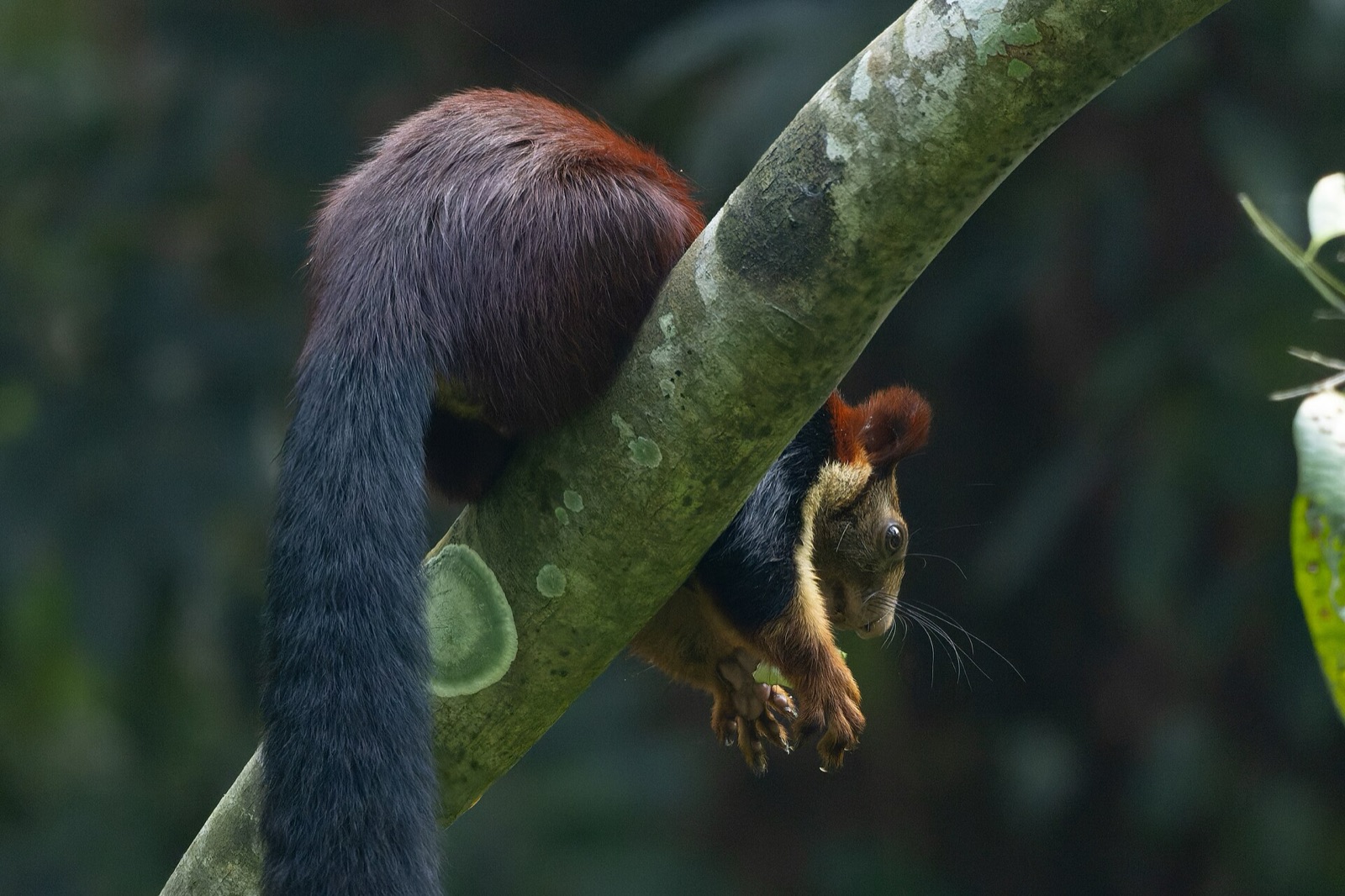
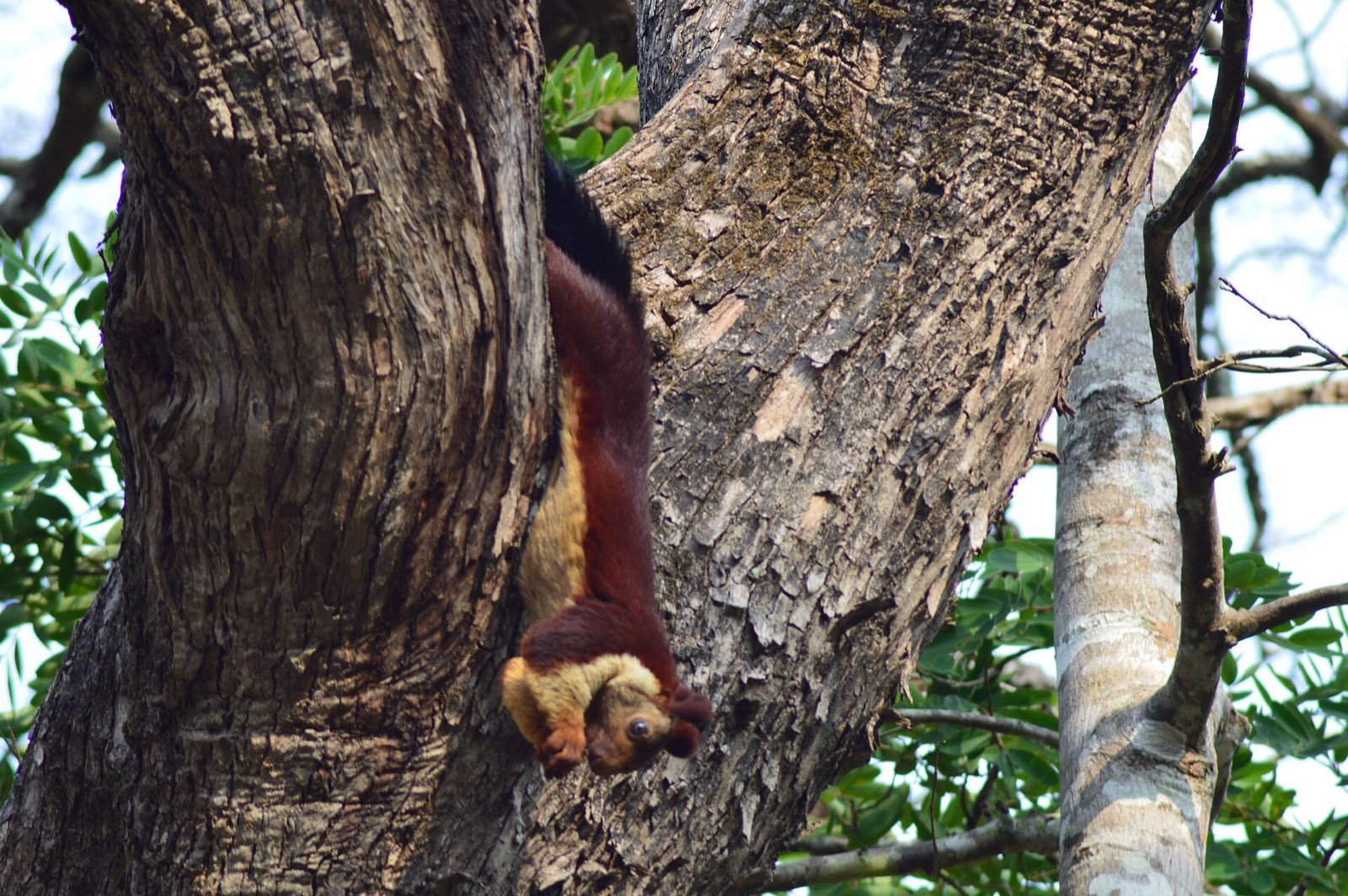
A Shekru hanging down from a branch

tap to close
Tap the dotsTisha Mukherjee · CC BY-SA 4.0

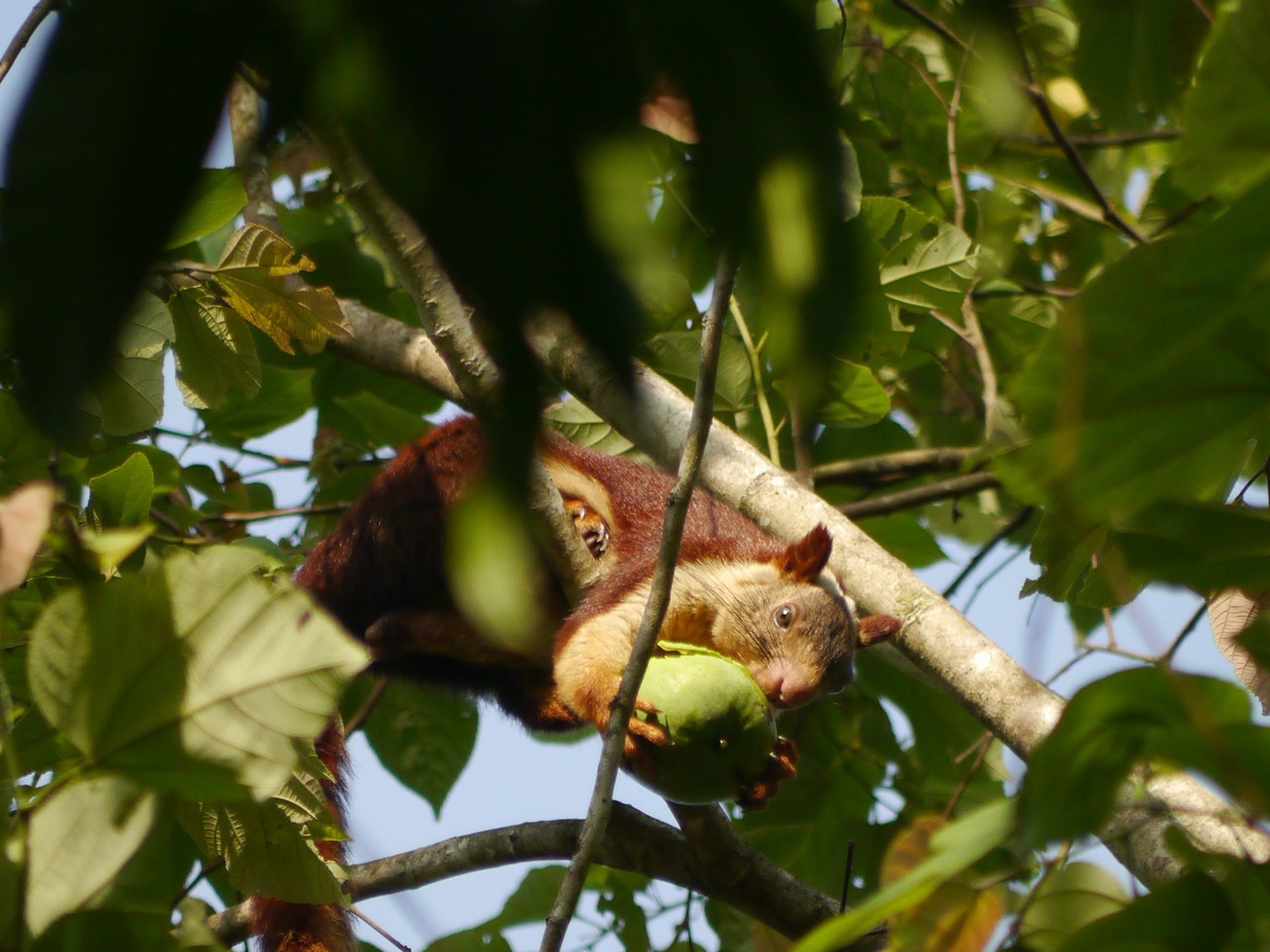
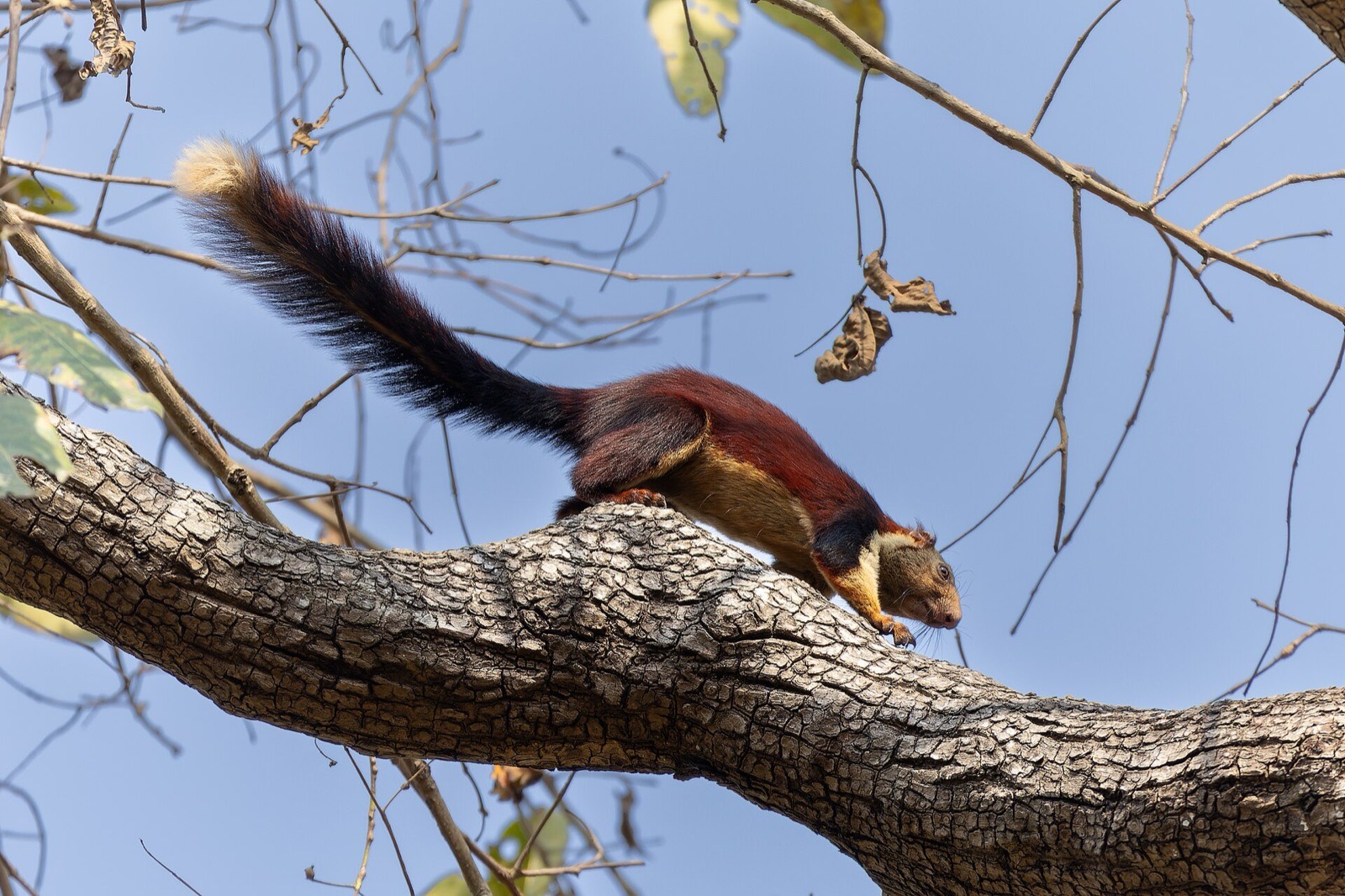
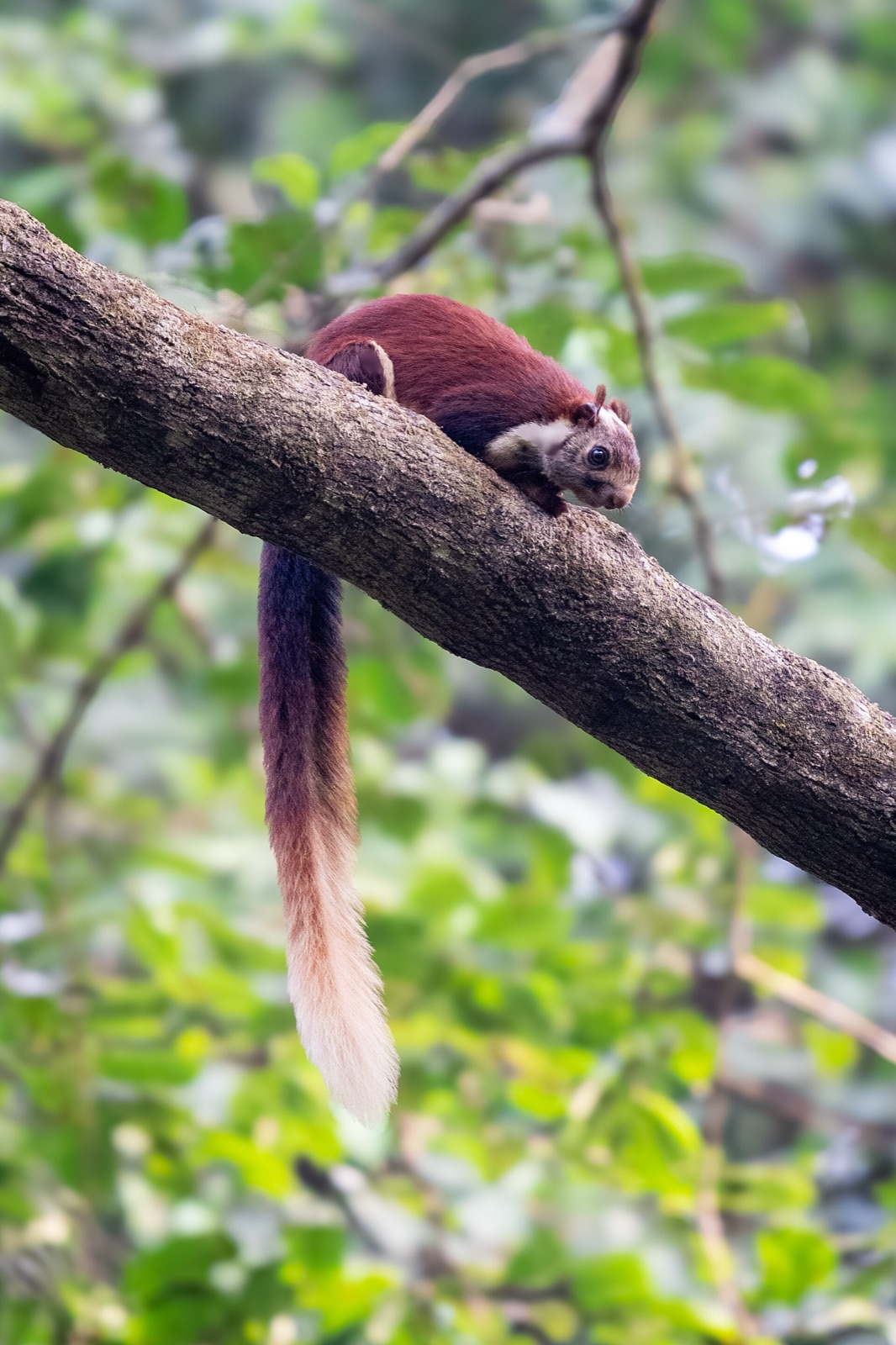
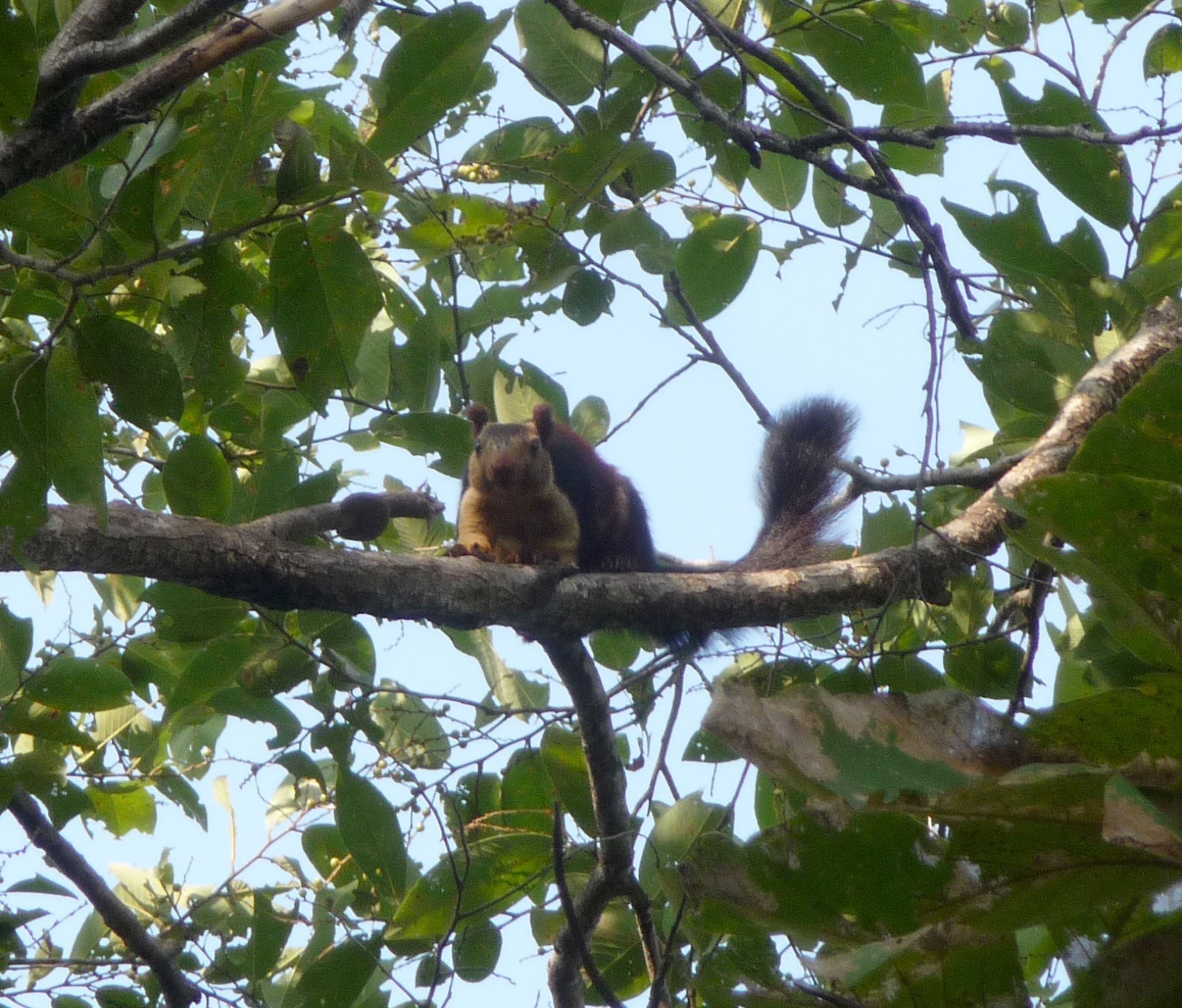
The Indian giant squirrel (Ratufa indica; the local form is often called elphinstonei) is a squirrel the size of a cat, nearly a metre from nose to the tip of its tail, rust and black and cream. It is Maharashtra's state animal, and this sanctuary was created for it.

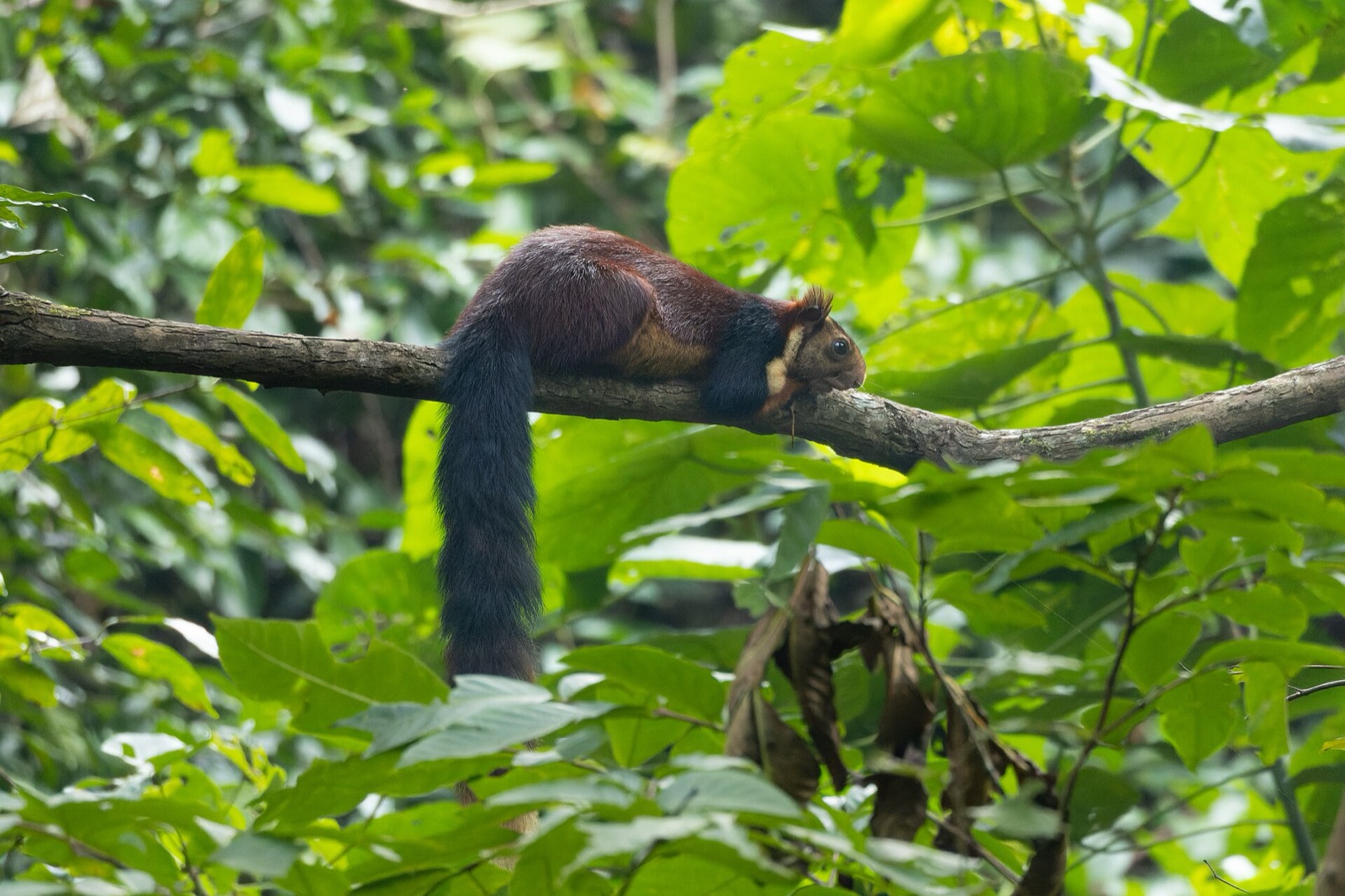
A Shekru almost never touches the ground. It builds several leafy nests high in the canopy and leaps up to six metres between crowns. Its whole world is a continuous roof of trees.

Cut a gap in that roof and you don't just lose trees. You cut the squirrel's road.
Hanging from a branch, tail streaming down
Maharashtra's own Shekru feasting on fruit (Thane)
On the run, bushy tail held high
Resting along a branch
Coming down a trunk head-first
Stretched out in the green canopy

Chapter 03

A small forest, astonishingly full

From a botanical survey published in the Journal of Threatened Taxa (2017), and sanctuary records.

0flowering plant taxa recorded
0found only in India
0on IUCN threat lists
0animal species reported

1,142 dots. Each one is a flowering-plant taxon (species or variety) recorded here.

Every flowering plant recorded at Bhimashankar is one dot here. Tap the buttons to see how many grow only in India, and how many are threatened.

Source: Journal of Threatened Taxa (2017). Dot layout is illustrative.

Chapter 04

Who lives here

keep scrolling →

Ratufa indica

Shekru

Giant squirrel. State animal. Lives its life in the canopy.

Ocyceros griseus

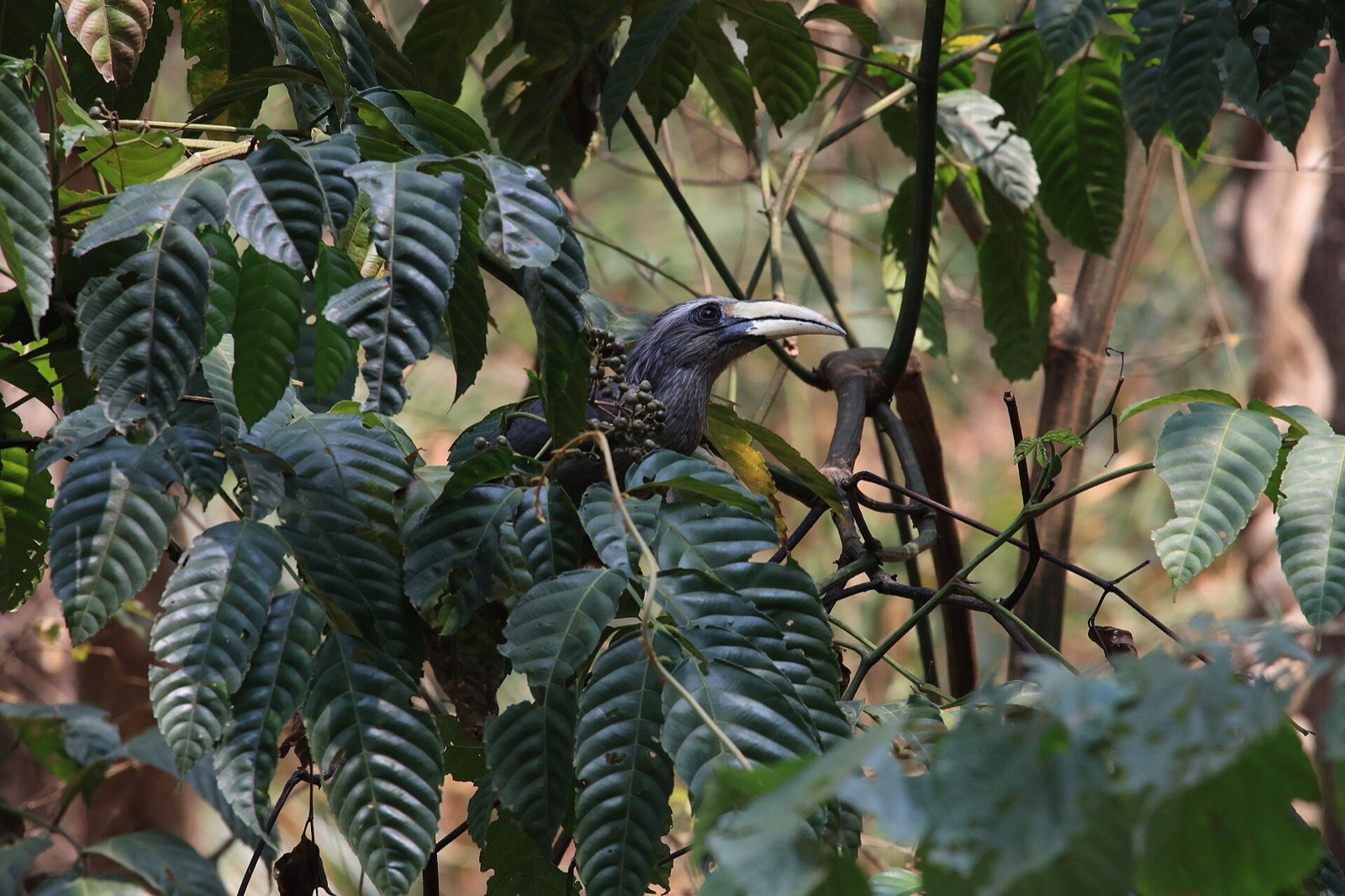
Malabar grey hornbill

Found only in the Western Ghats. A fruit-eater that plants the forest as it flies.

Myophonus horsfieldii

Malabar whistling thrush

The "whistling schoolboy" — its human-like whistle carries along the forest streams.

Craspedocephalus malabaricus

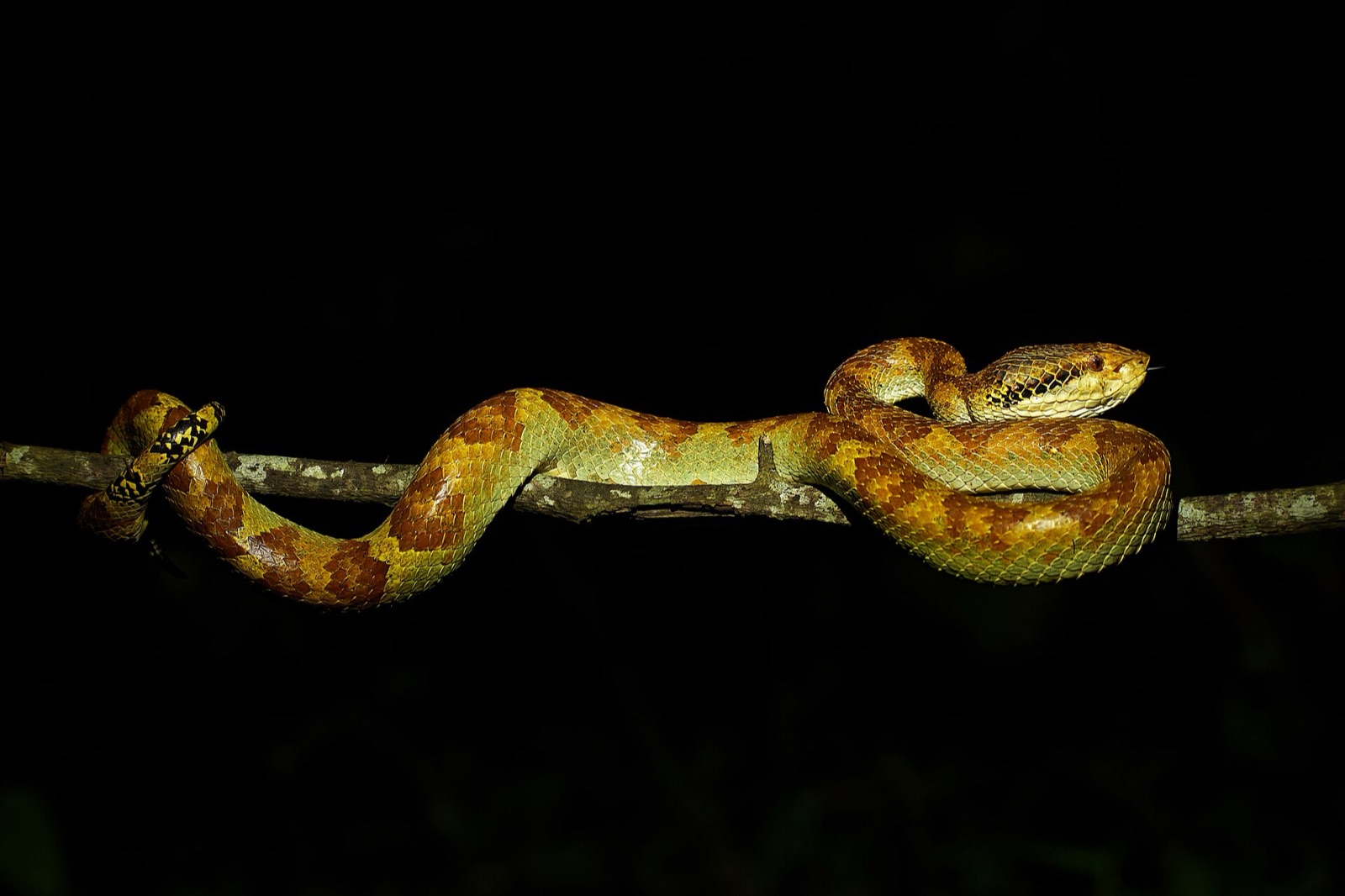
Pit viper habitat

Damp, mossy undergrowth where green pit vipers wait, perfectly still, for hours.

Harpactes fasciatus

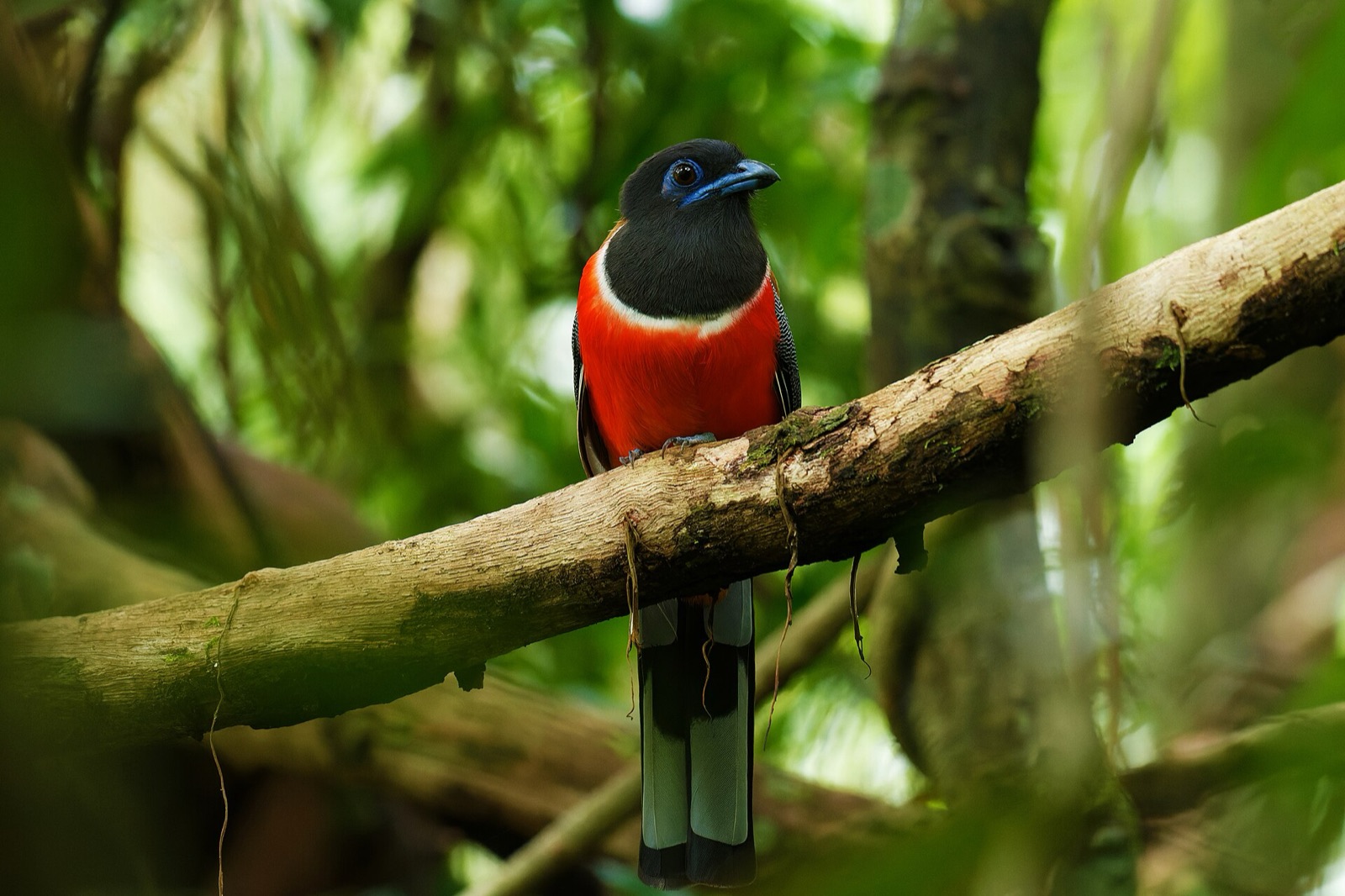
Malabar trogon

A shy bird with a crimson chest. It lives only in dense, unbroken forest, a sign of a healthy one.

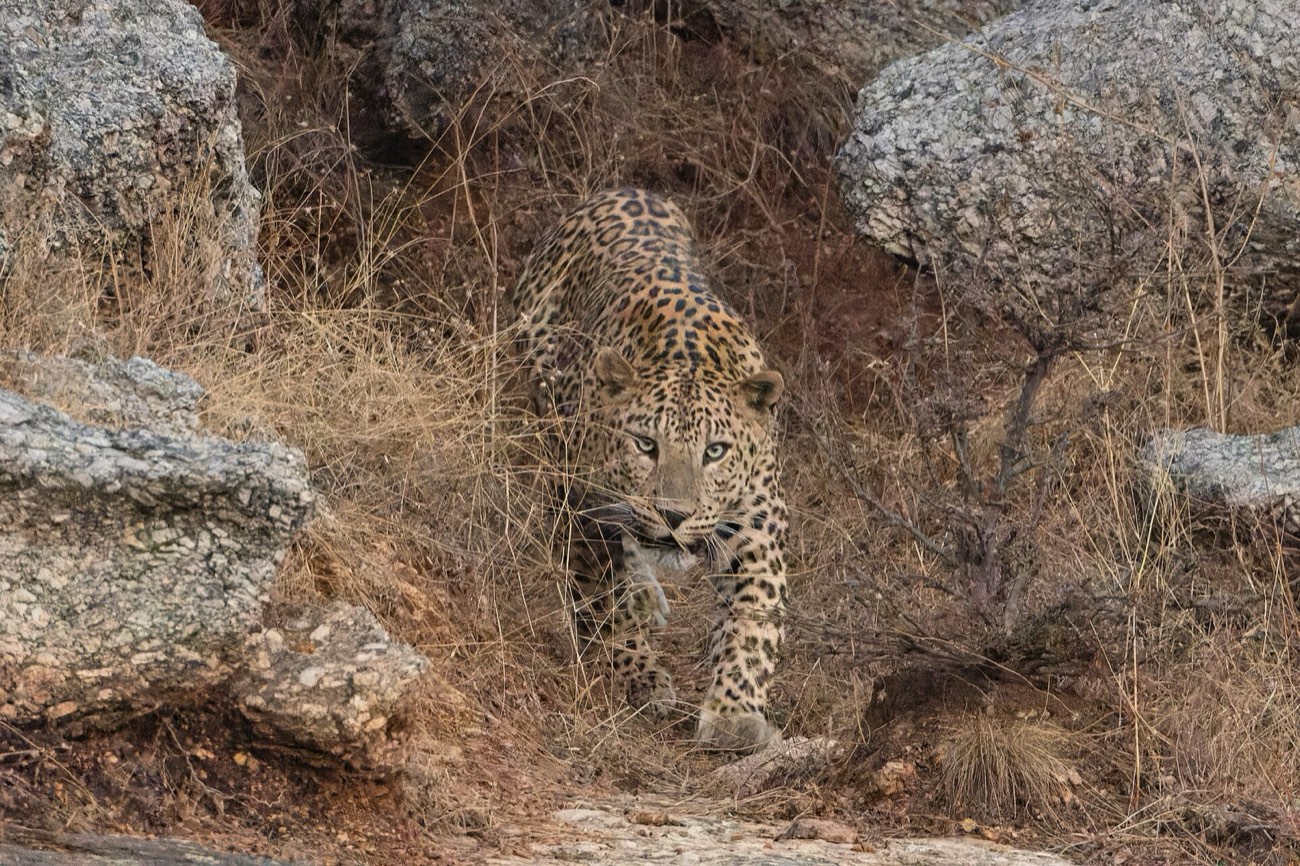
Panthera pardus

Leopard

The sanctuary's top predator, moving quietly at night through forest and along village edges.

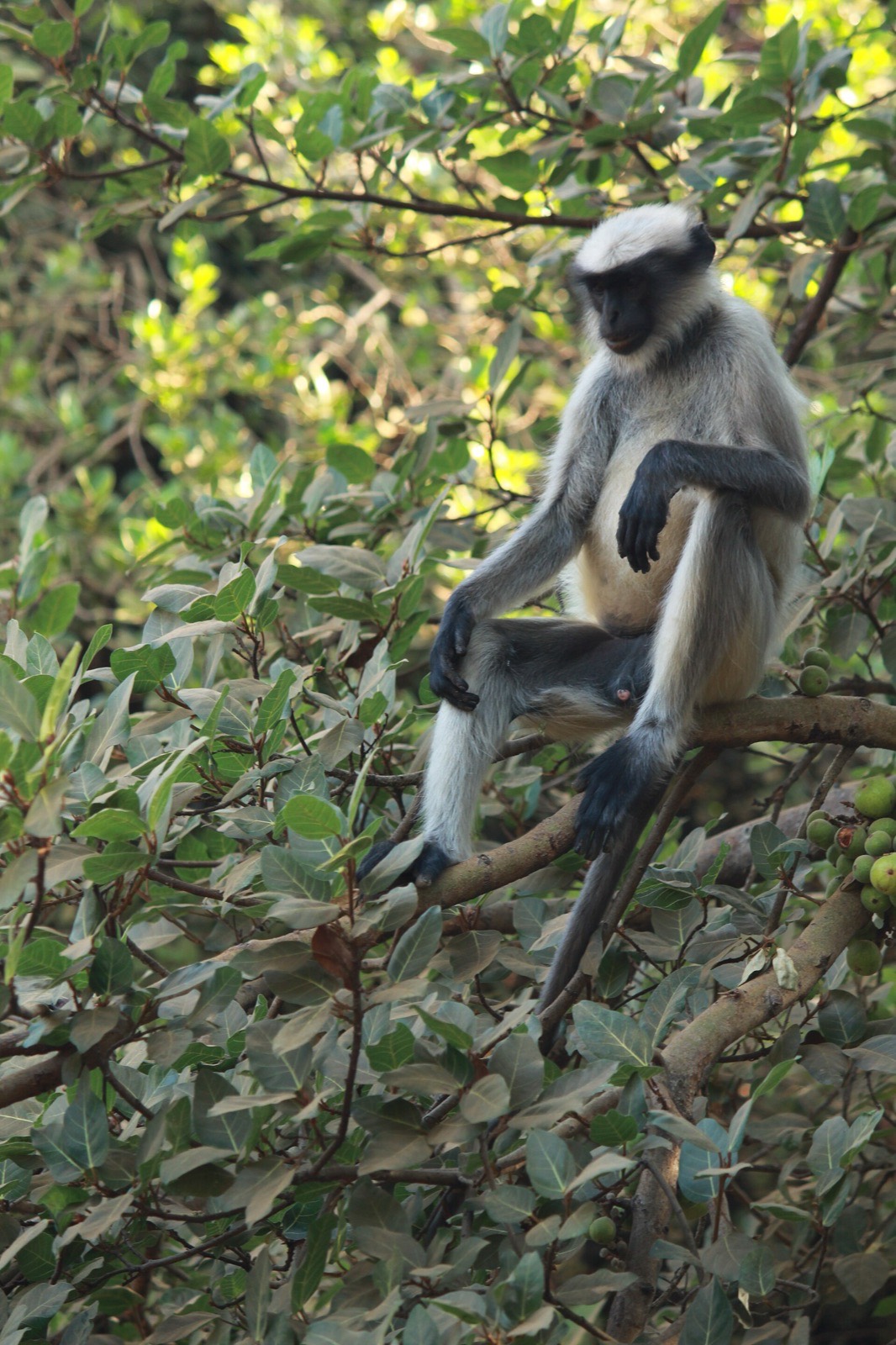
Semnopithecus

Grey langur

Photographed inside Bhimashankar sanctuary. Troops live in the trees, eating leaves, fruit and flowers.

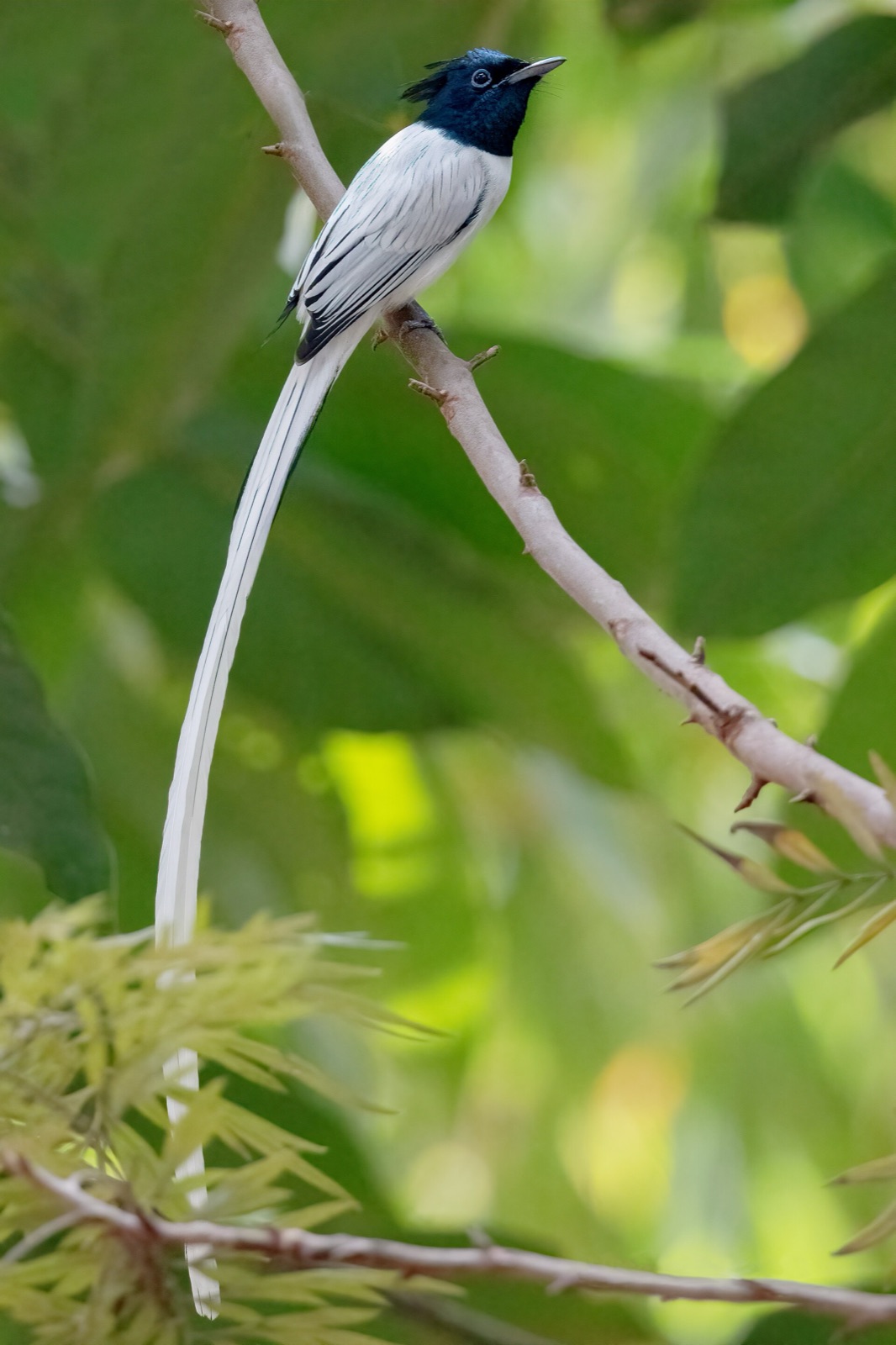
Terpsiphone paradisi

Indian paradise flycatcher

The male's white tail ribbons through the air. It nests in the ghat forests in the monsoon.

Papilio polymnestor

Blue Mormon

Maharashtra's state butterfly, gliding like blue velvet along forest paths after the rains.

Attacus taprobanis

Atlas moth

One of the largest moths on Earth. Its wingtips look like a cobra's head.

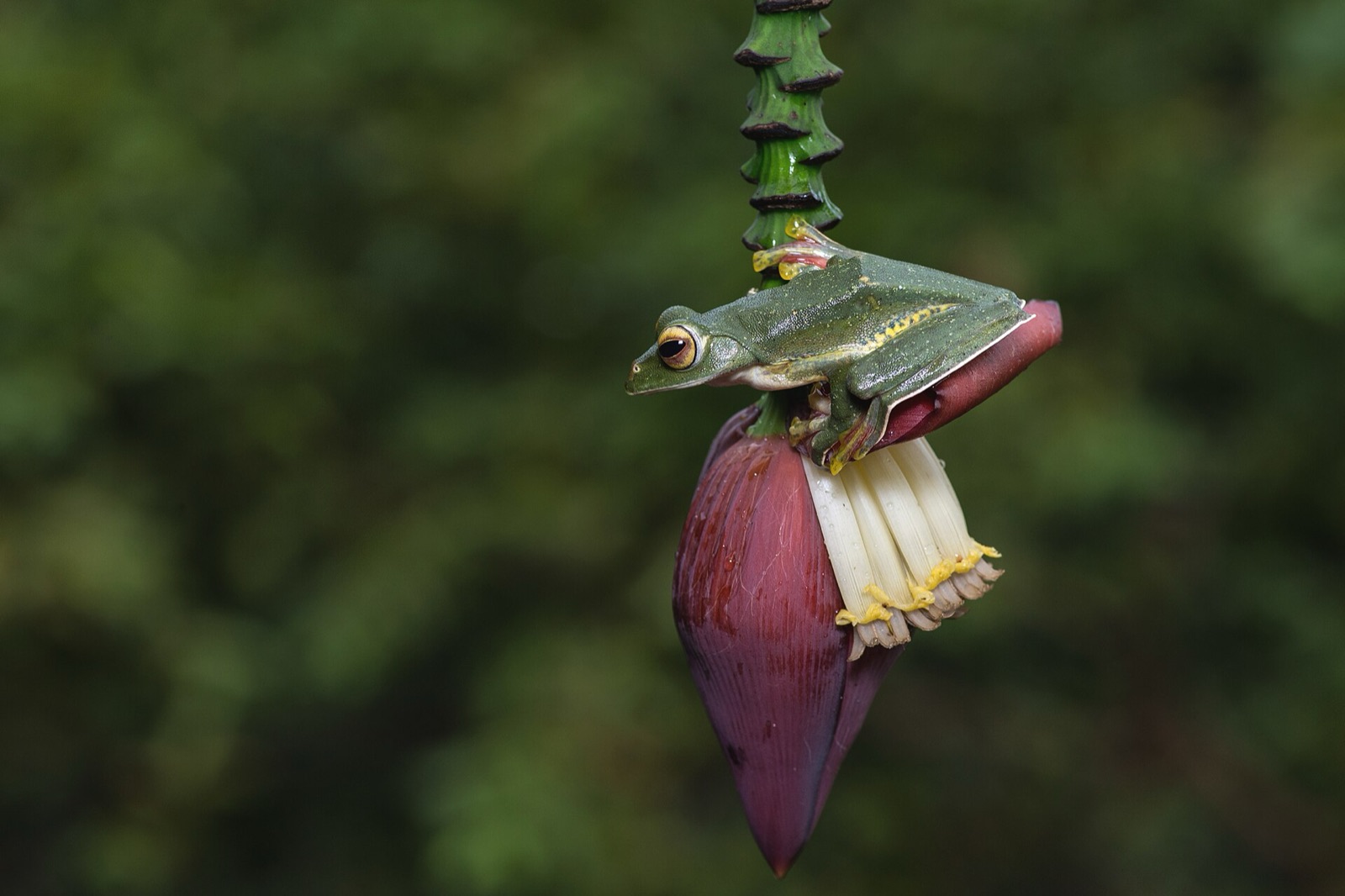
Rhacophorus malabaricus

Malabar gliding frog

Glides from tree to tree on webbed feet. A Western Ghats speciality.

Mantodea

Praying mantis

Silhouetted against the sun, photographed inside the sanctuary.

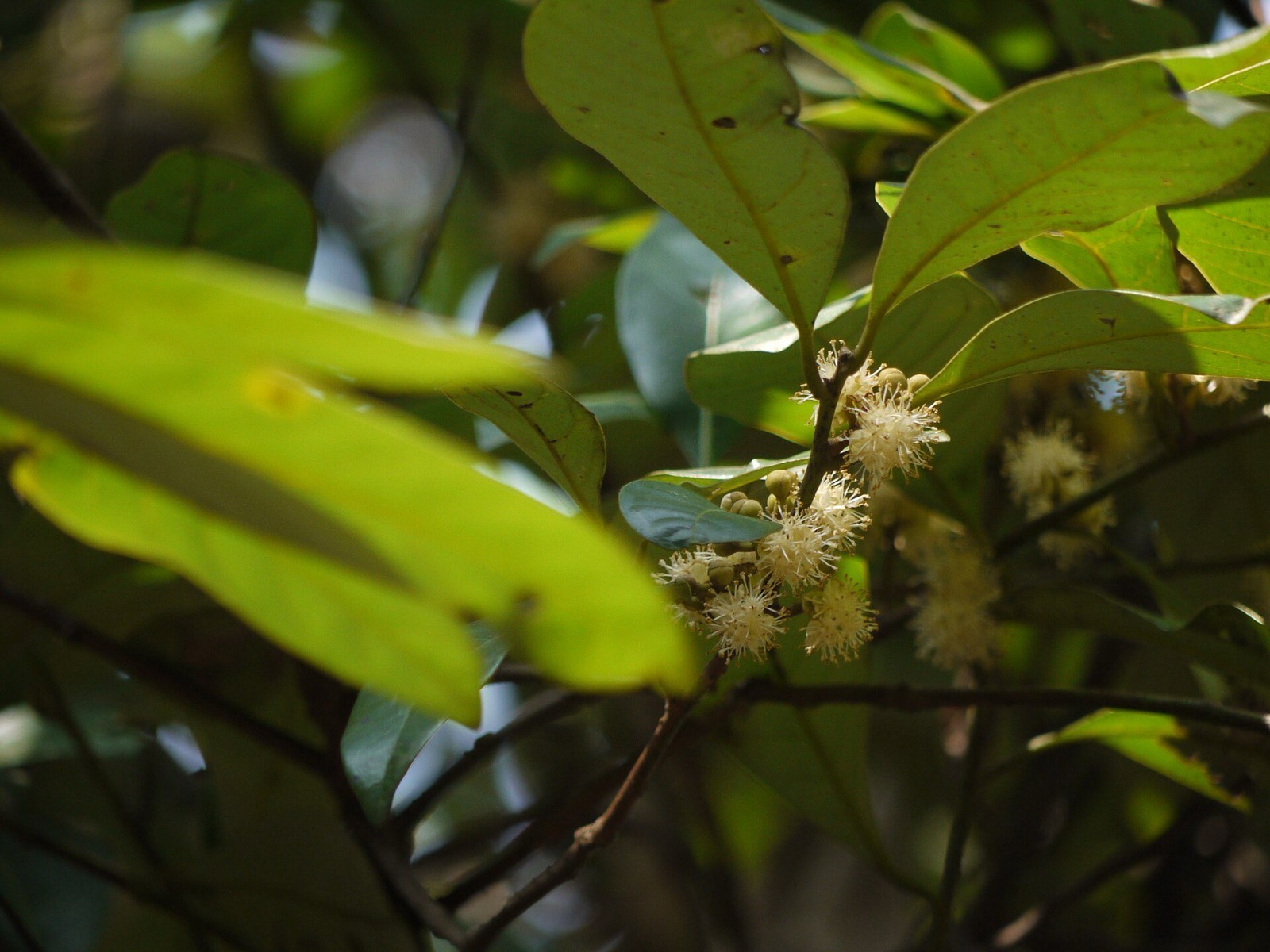
Litsea josephii

Laurel of the Ghats

One of the 1,142 flowering plants recorded here; 217 of them are found only in India.

Western Ghats · video

Inside the forest

A world hidden in every leaf — one footpath, countless lives.

Xantolis tomentosa

Khombhal, the ancient climber

A woody giant in the sanctuary was estimated in 1984 to be 800–1,000 years old. Older than many Sahyadri forts as we know them.

Bioluminescent fungi

The forest that glows

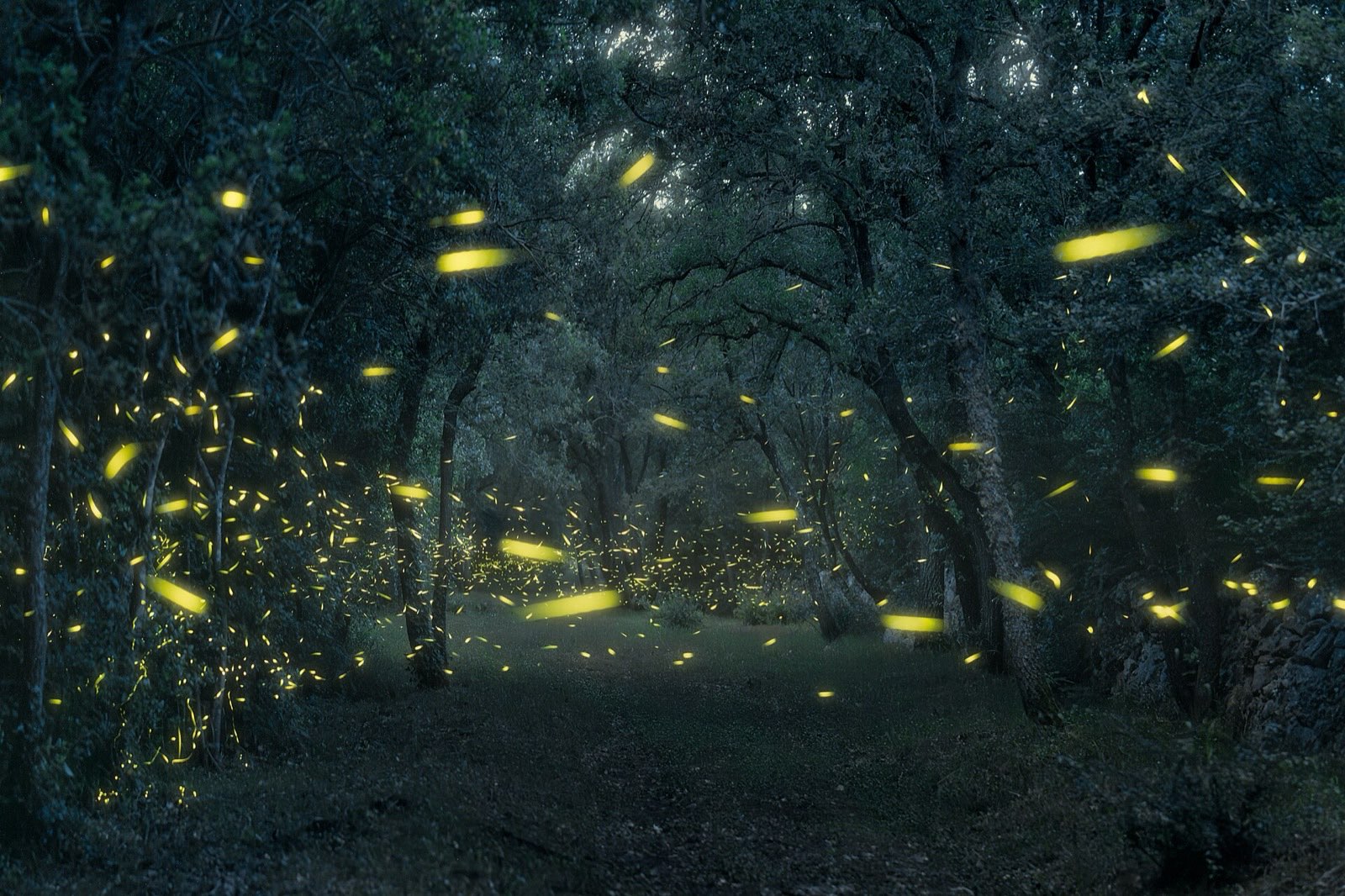
On monsoon nights, fungi on rotting wood glow green. Before the rains, millions of fireflies blink in sync.

And more

Leopard · barking deer · mouse deer · pangolin · sambar · langur

Mammals that need unbroken forest to move between feeding grounds and water.

Chapter 05

A forest that breathes in seasons

Western Ghats · video: Mathanprasath K, CC BY 4.0
May – June

Fireflies

Before the first rain, the forest floor lights up. Thousands of visitors come just for this.

June – September

Monsoon

Heavy rain soaks the hills. Streams feed the Bhima to the east and the Konkan rivers to the west.

October – February

Cloud-sea

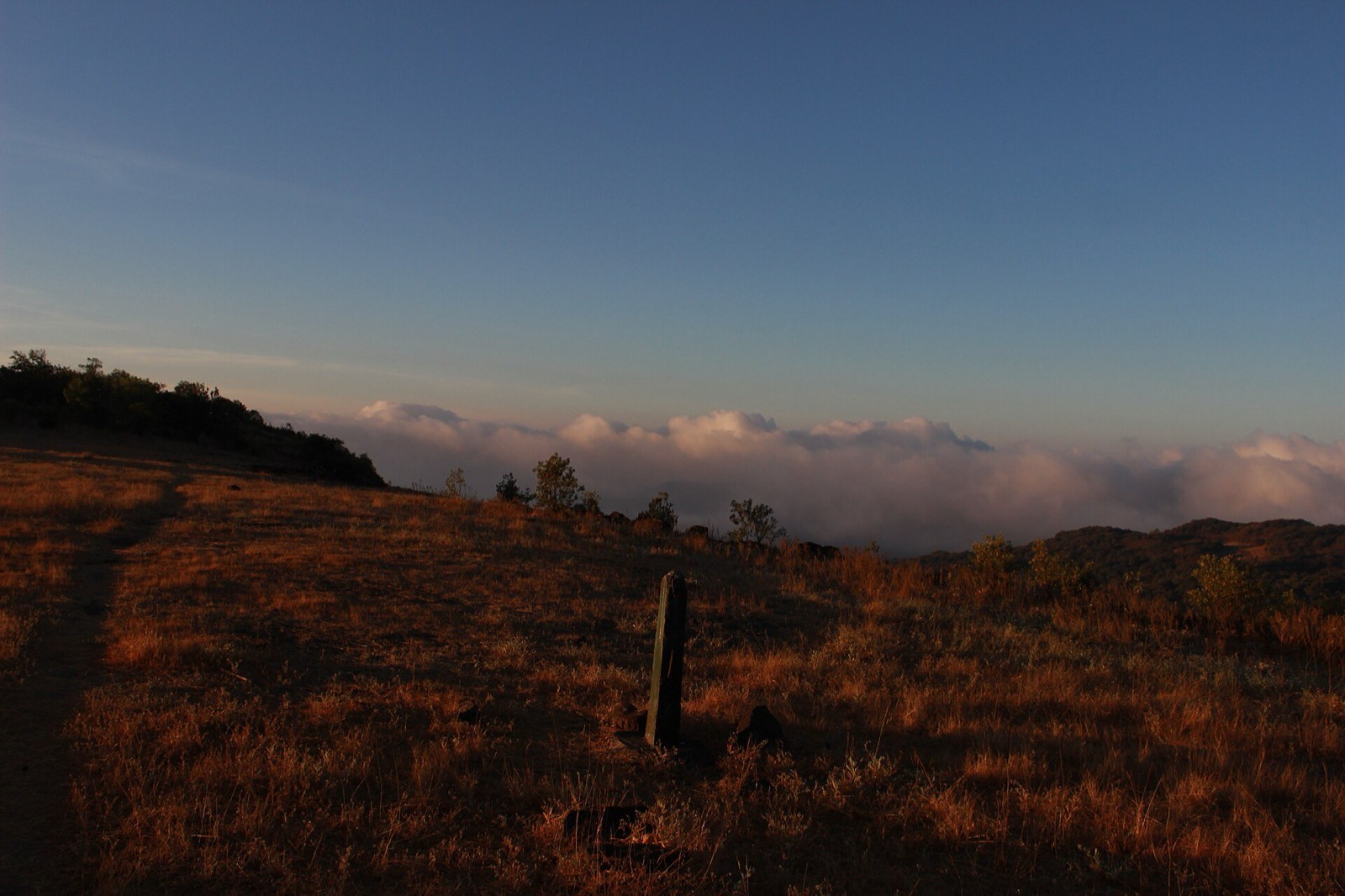
Mornings above a sea of mist; the valleys fill with cloud and the ridges float.

March – May

Dry season

Leaves fall, fruits ripen, and every patch of water becomes a lifeline for wildlife.

Photographs

Faces of the Sahyadri

Cliffs, streams, flowers and birds: the mountain range Bhimashankar belongs to. Tap a photo to see it large.

The great escarpment, where the Deccan ends (Junnar)
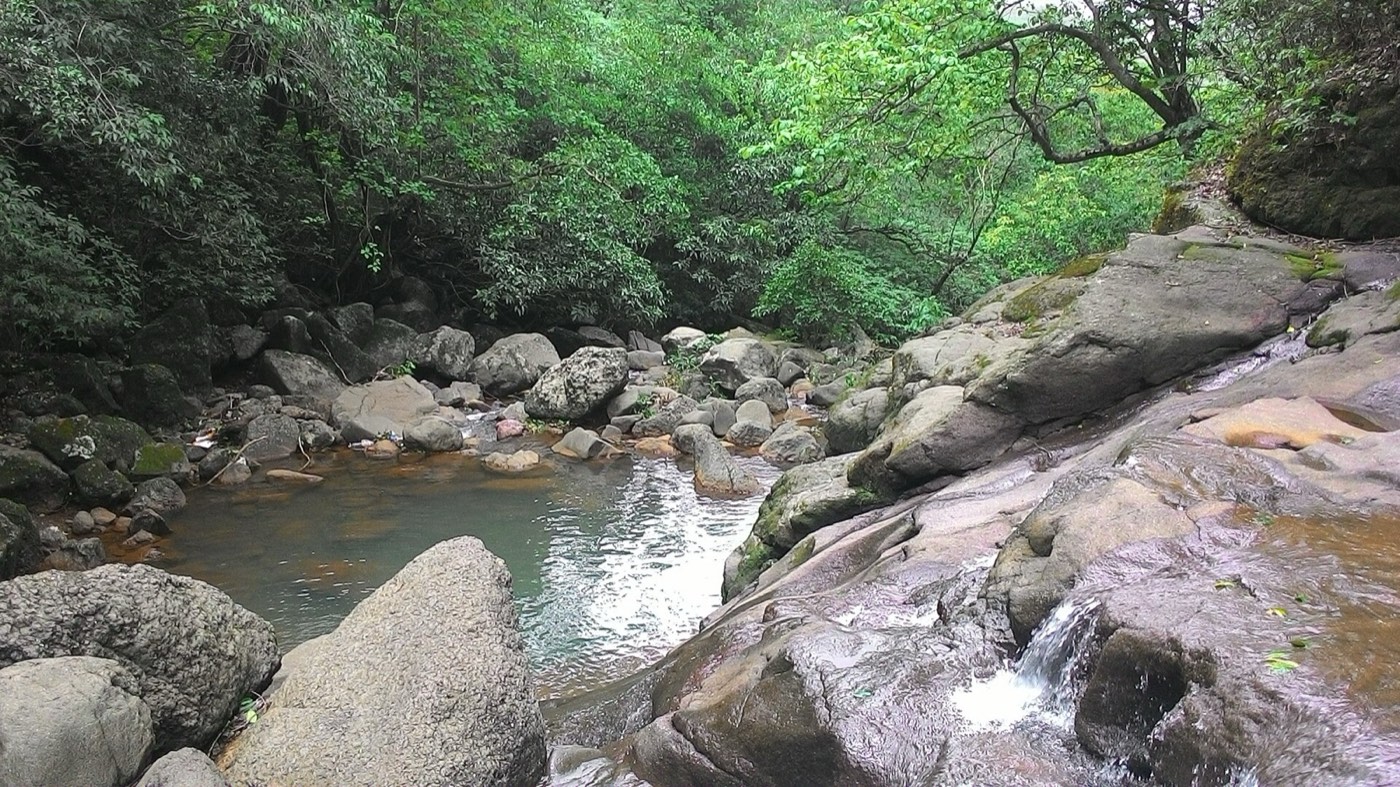
A stream near the source of the Bhima
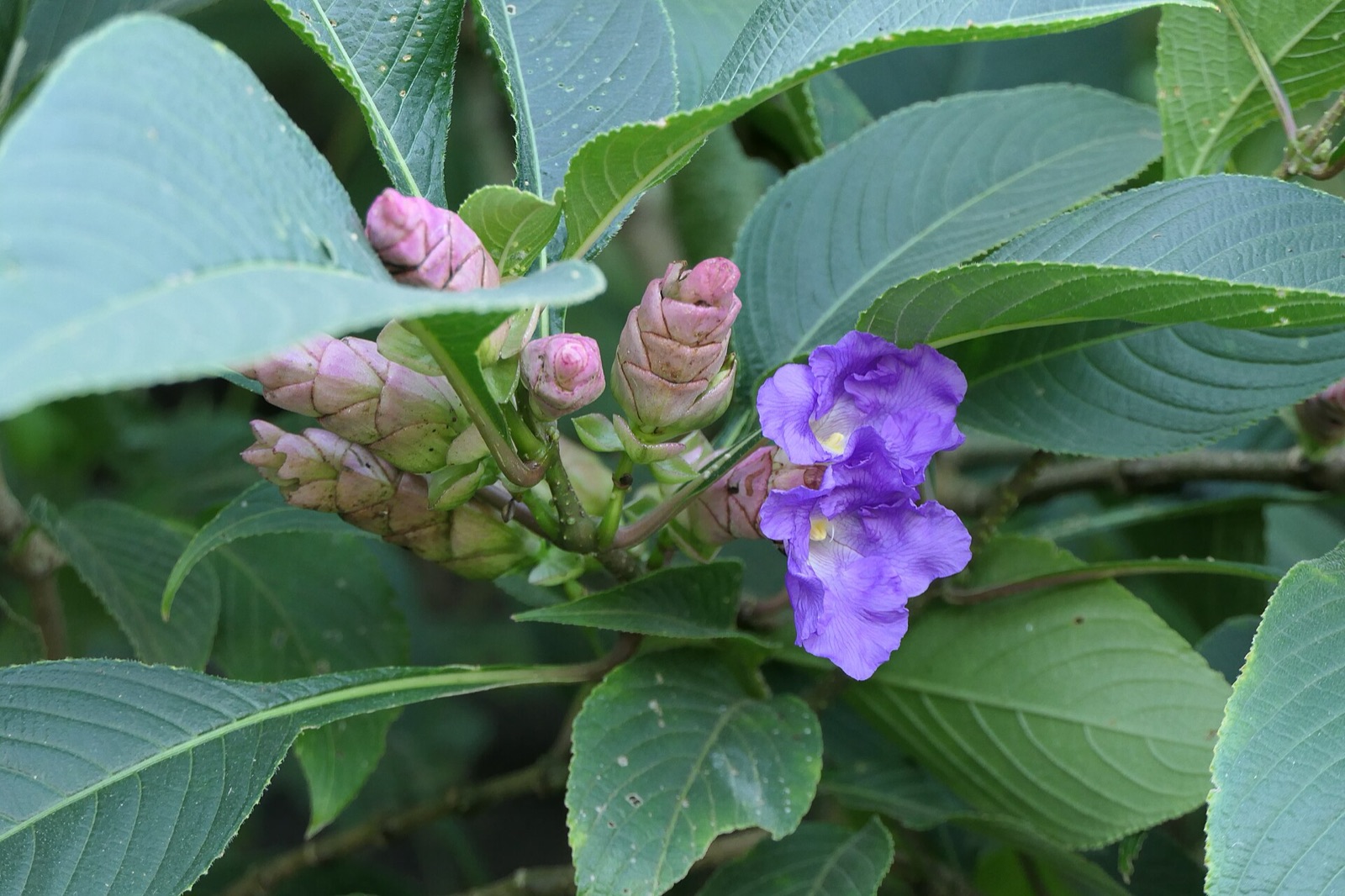
Karvi, which blooms en masse once in seven or eight years
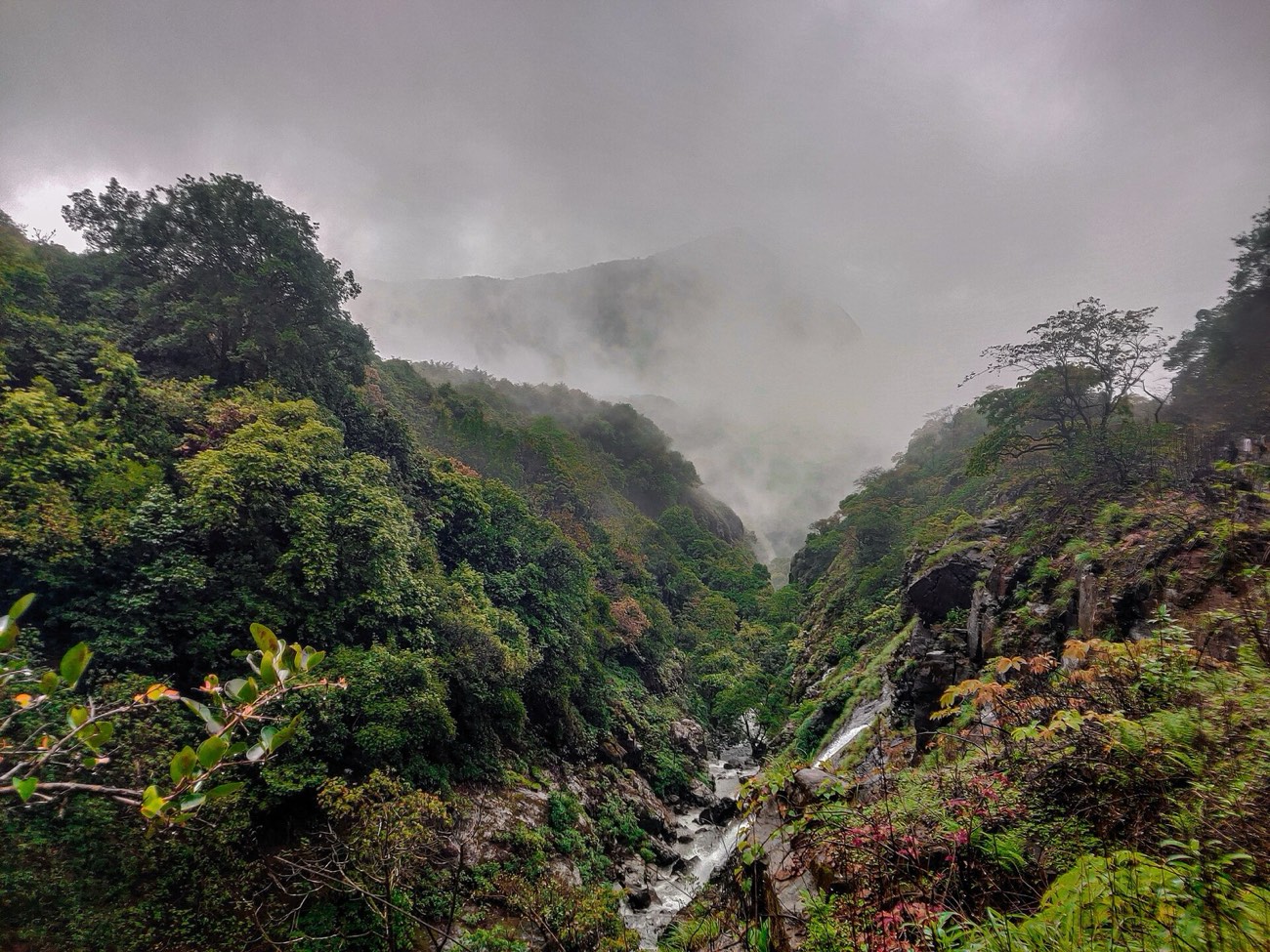
A monsoon gorge wrapped in cloud
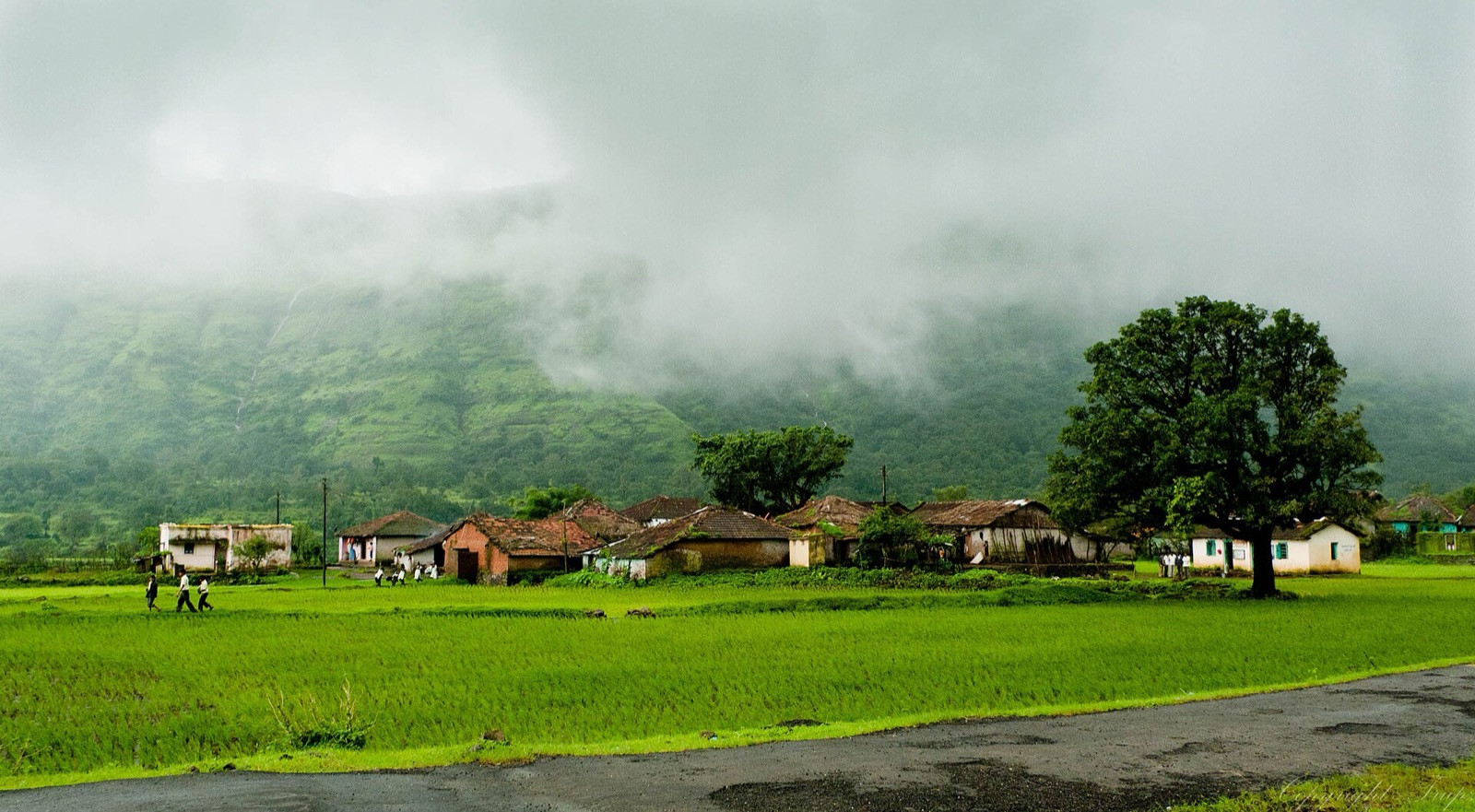
A Sahyadri village and its paddies under monsoon cloud
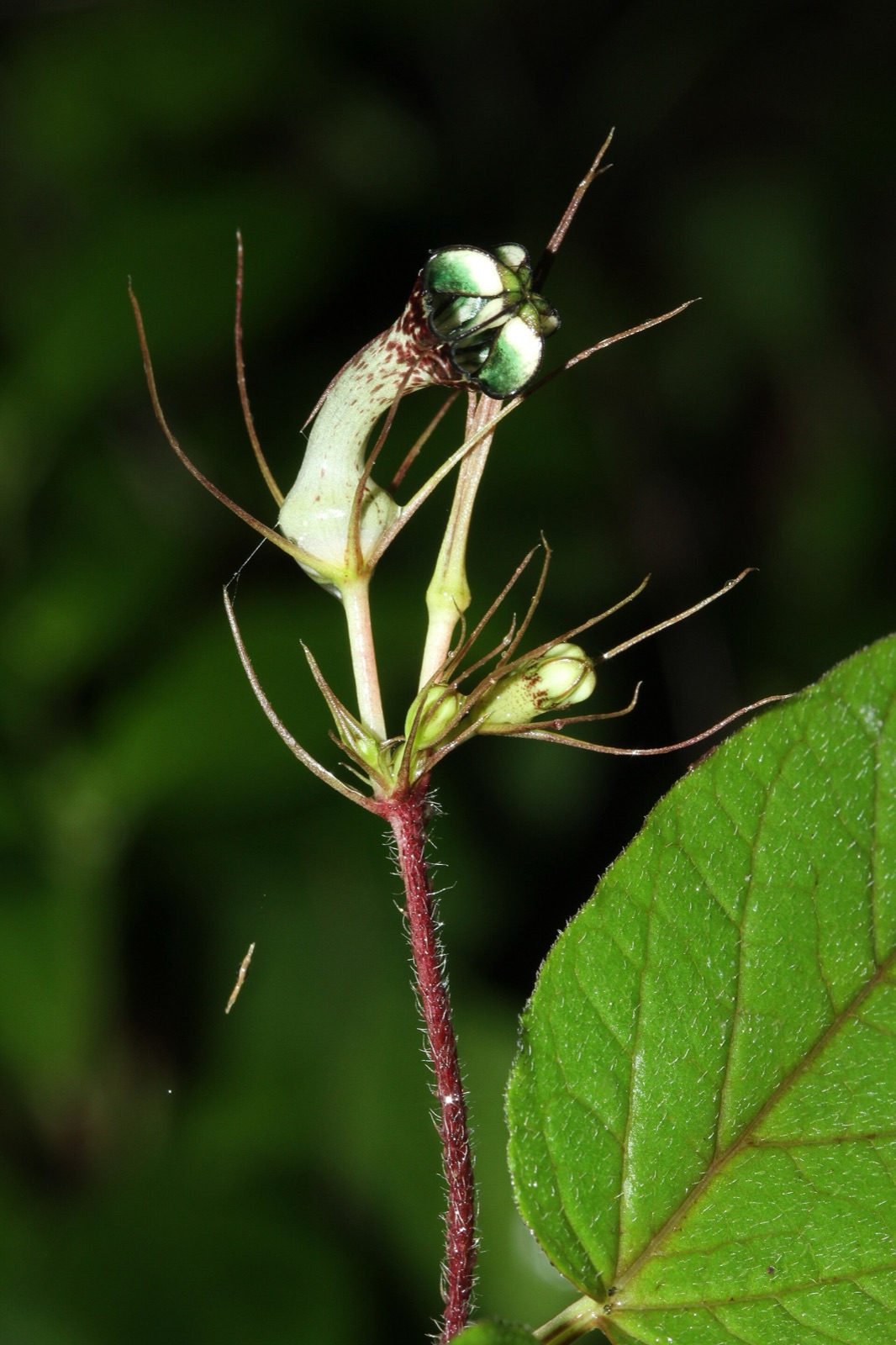
Ceropegia, a rare lantern-flower of the Western Ghats
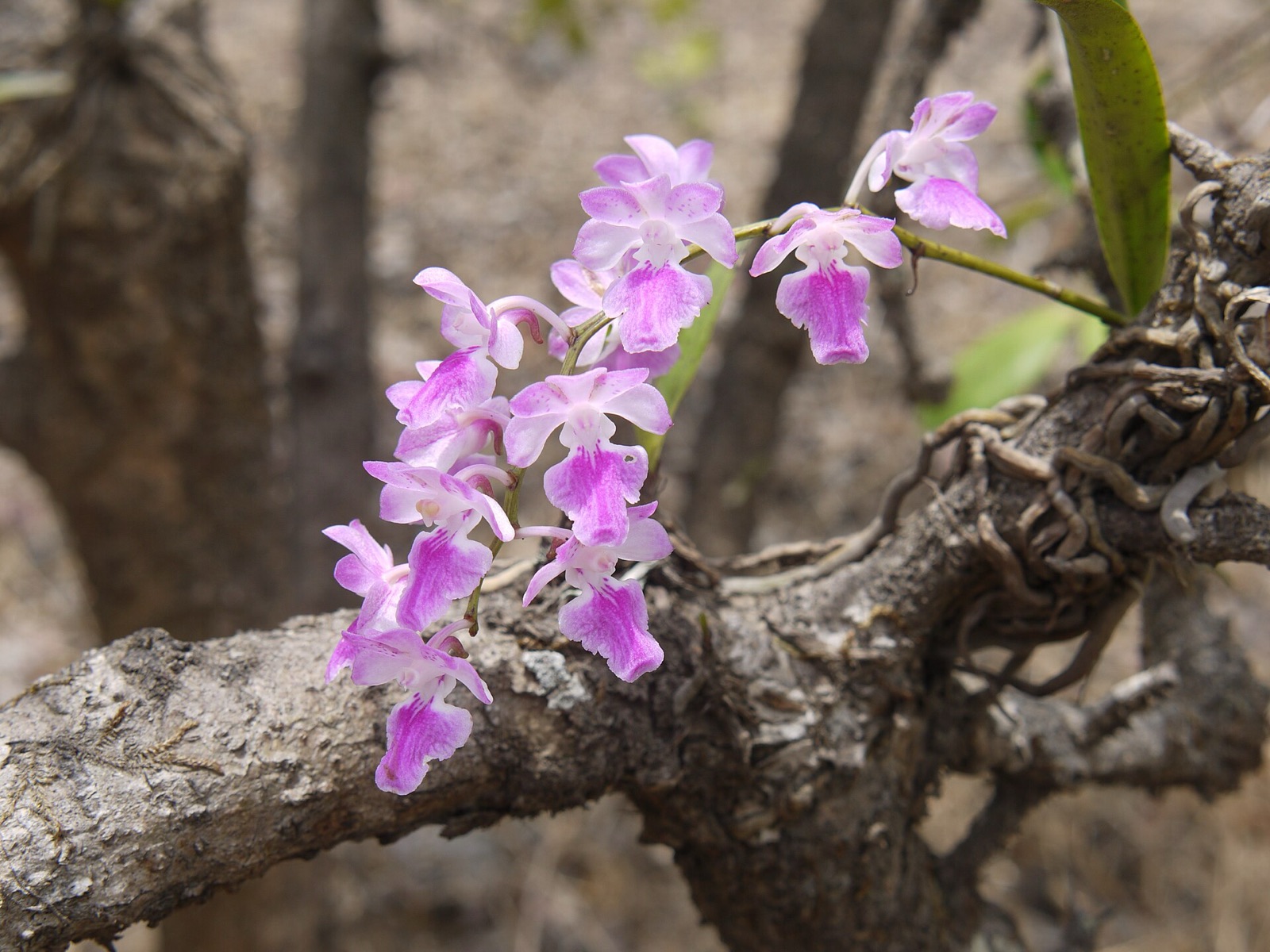
A wild orchid growing on the trees
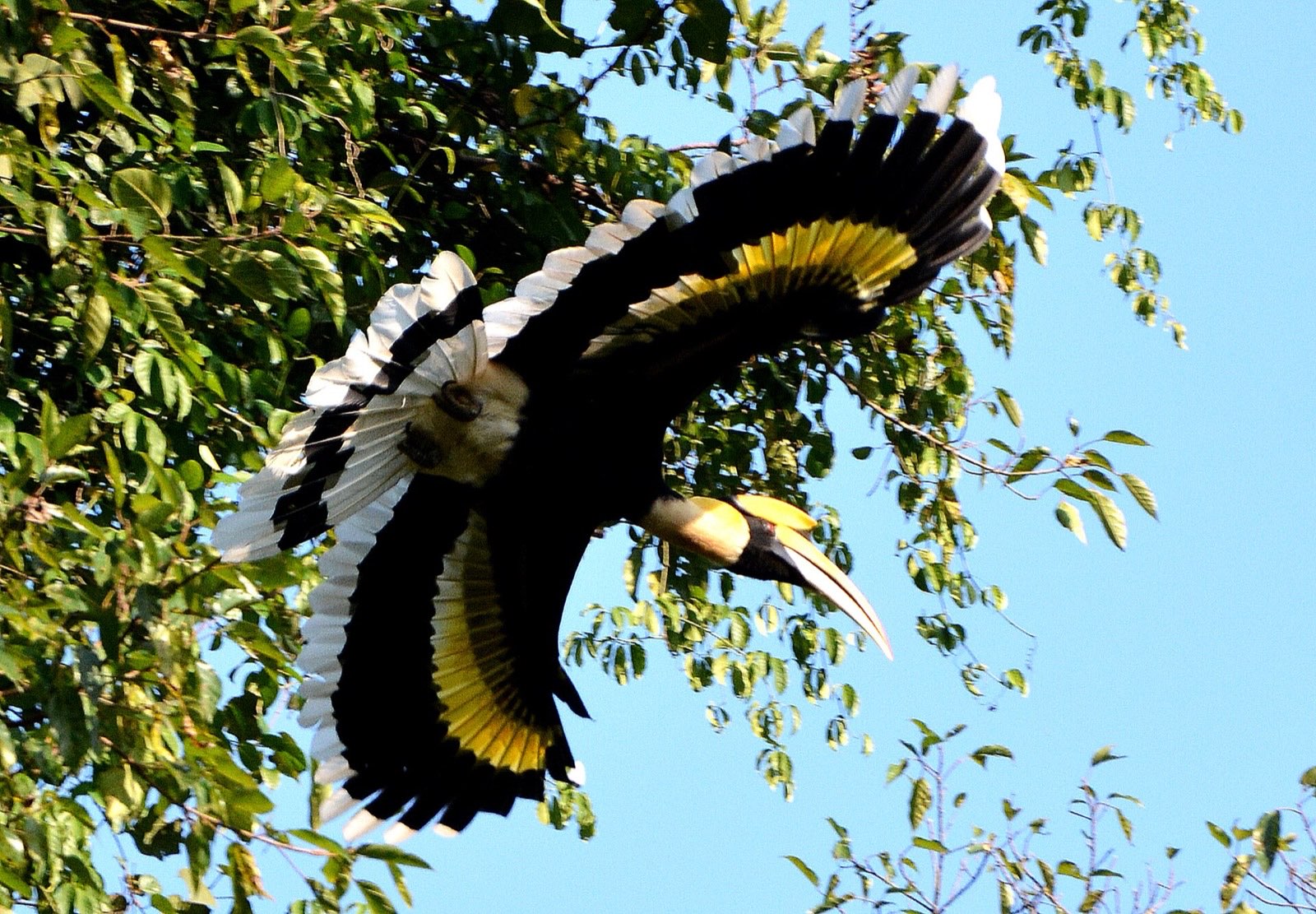
The great hornbill, king of the Western Ghats

Films

Bhimashankar from the sky

Drone films and shorts, with thanks to the creators who filmed this forest. Videos play from YouTube.

Bhimashankar Eco-Tourism FilmMaharashtra Forest · 10:18
  • Bhimashankar Eco-Tourism FilmMaharashtra Forest Dept (official)
  • Bhimashankar in Shravan — the sacred forestDaily life · drone
  • Bhimashankar Drone Videokelvin santarita · 1440p
  • Bhimashankar in the monsoon — drone viewsDocTourer Shashvat
  • Bhimashankar trek — drone viewAkash Thakur
  • Bhimashankar and the opera of firefliesCalm Wilderness
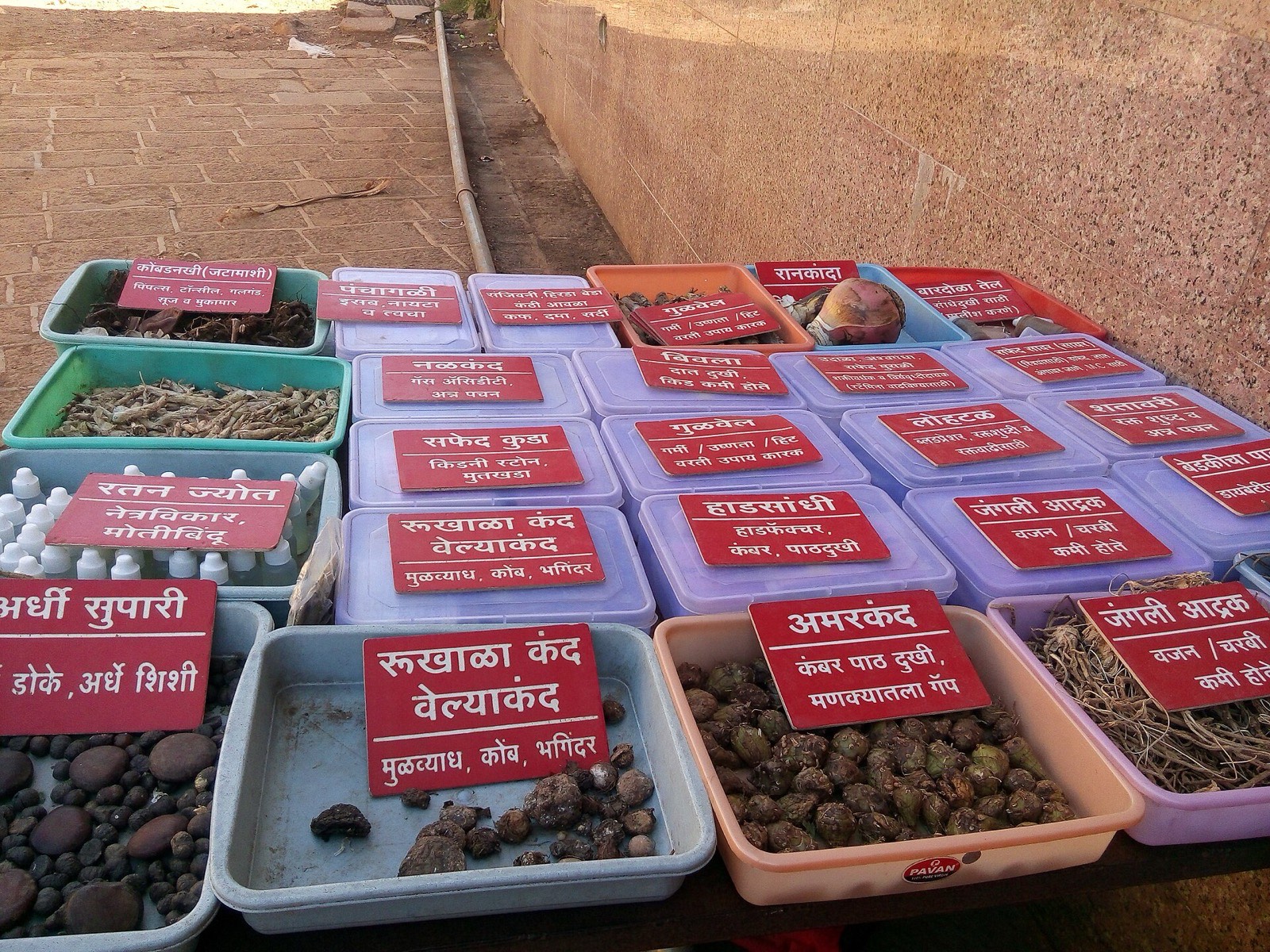
Forest herbs, sold by local sellers near the temple.
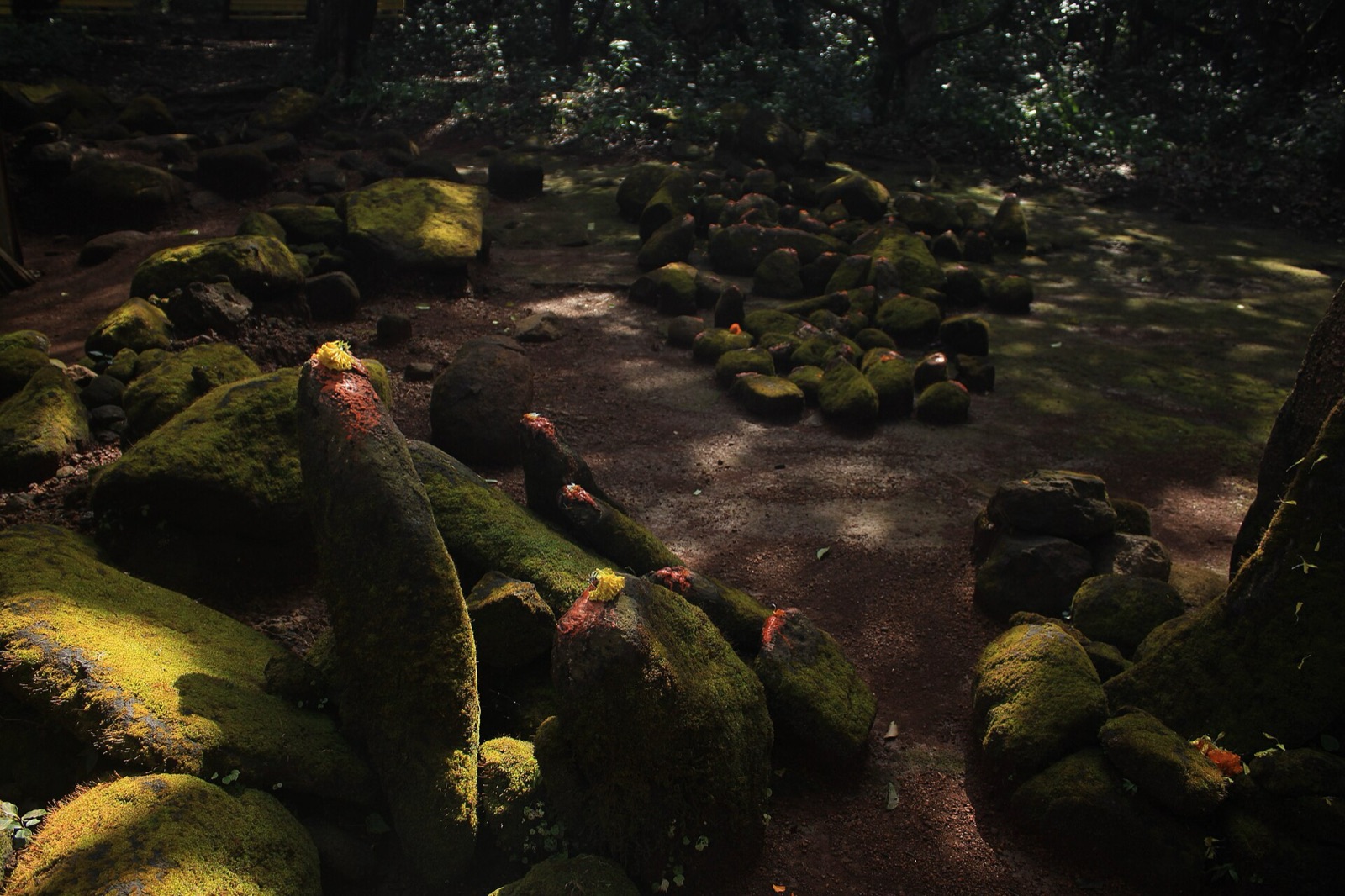
A devrai: forest kept in the deity's name, deep in moss (Junnar).

Chapter 06

Kept by its people

The forest is not empty. Mahadeo Koli and Katkari Adivasi families have lived in and around it for generations.

Their devrai, or sacred groves, are patches no one cuts because they belong to the deity. Fourteen of them survive inside the sanctuary, some holding the oldest trees in the landscape.

Women's self-help groups collect and sell Bhimashankar honey; villages like Yelavali run community eco-tourism for trekkers. The Katkari are recognised as a Particularly Vulnerable Tribal Group. Decisions about this forest are decisions about their lives.

Chapter 07 · Understand the issue

What exactly is the issue?

Slogans aside, in five steps: where, what, how much, when, and your questions.

1

Where is it?

Bhimashankar sanctuary sits on the Sahyadri crest (Pune district). About 15 km to its south-west, the same escarpment drops into Karjat taluka of Raigad. The project site is on these slopes and on the Dhak plateau above them, around the villages of Pali, Potal, Saidongar, Ambot, Dhak and Bhaliwadi, about 10 km east of Karjat town.

The Pej, a small seasonal river that rises on this plateau, flows north-west and joins the Ulhas near Bhivpuri. The Ulhas flows on past Badlapur, Ulhasnagar and Kalyan, a drinking-water source for millions.

Satellite image: Esri World Imagery. Rivers and sanctuary boundary: OpenStreetMap. Project location from the reservoir coordinates in official documents.

2

What is the project?

Upper reservoir (on the Dhak plateau) Lower reservoir · Pej river tunnel → turbine
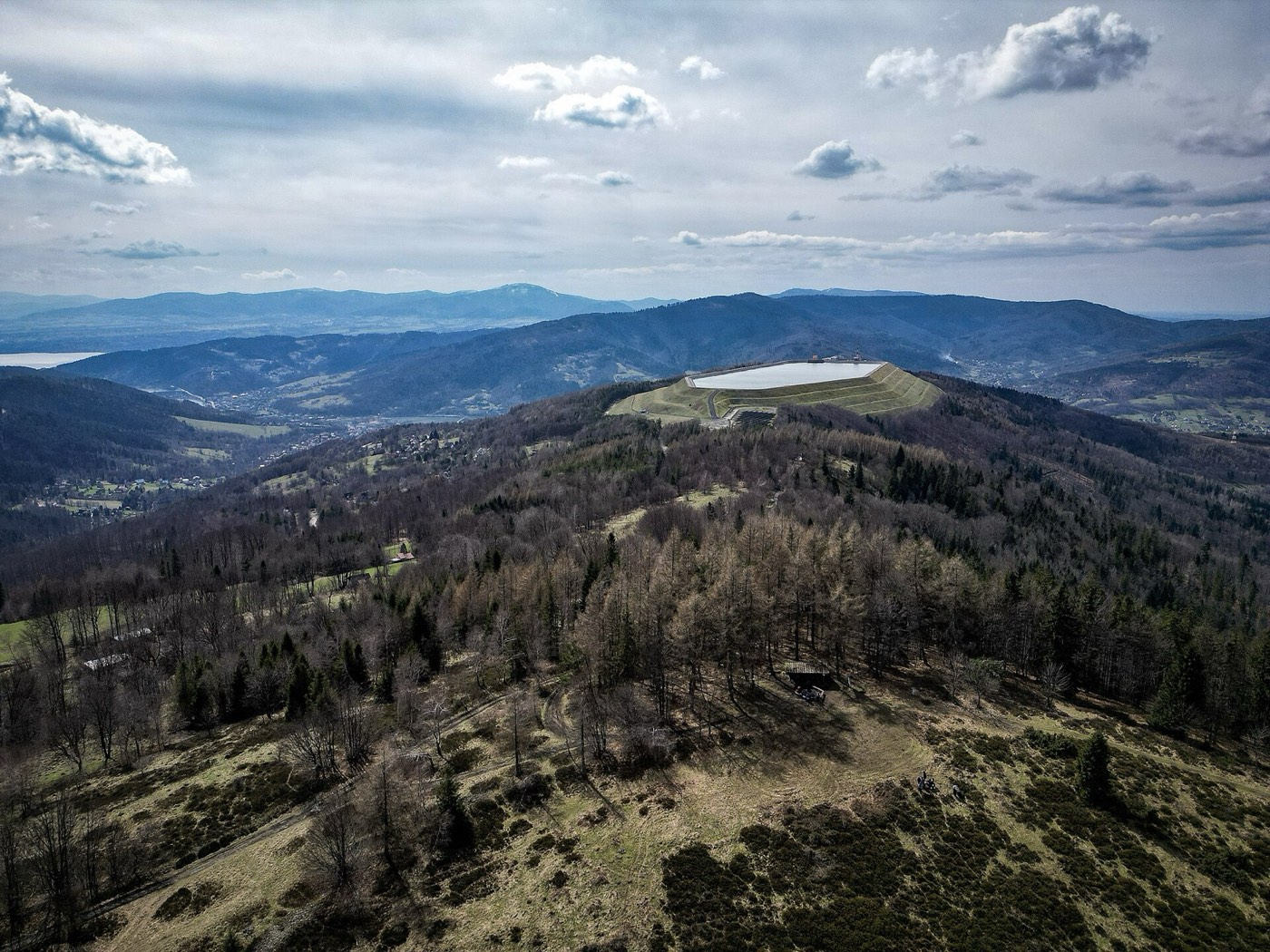
What a hilltop reservoir looks like in reality. Example: the Żar plant, Poland.

The project is a giant "water battery". In the day, when solar power is plentiful, water is pumped from a lower dam up to a lake on the hilltop. In the evening, when demand peaks, the same water is let down through turbines to make power.

Official project documents place the upper reservoir on the Dhak plateau and the lower reservoir behind a ~59 m dam across the Pej. The plateau goes under water, and the river is dammed.

Storage like this matters for clean energy. The question is not the technology, it's the location. Felling Western Ghats reserved forest for green energy is a contradiction worth questioning.

3

How big is 233 hectares?

३२६

The big square is the 233 hectares of forest land the project needs. Pick something to see how many fit inside:

The project's environmental-clearance filings give a total project area of 377 hectares: 233 ha of forest land (mostly reserved forest) and 144 ha of other land.

Football pitch ≈ 0.71 ha, Shivaji Park ≈ 11.3 ha.

4

What has happened so far

  1. Bhimashankar Wildlife Sanctuary notified to protect the Shekru.

  2. Torrent PSH 3, a Torrent Power subsidiary, signs an MoU with Maharashtra's Water Resources Department for Saidongar-1.

  3. Public hearing at Gaurkamath, Karjat (442 attended). Activists object that it was held outside the affected villages and announced late.

  4. Stage-I forest clearance (31 Dec) and central environmental clearance (12 Jan); civil works contract to L&T.

  5. Equipment contracts announced for "India's largest pumped-storage plant".

  6. Forest Department permits the felling of 32,490 trees; felling begins around 20 Oct.

  7. MLA Rohit Pawar raises the felling of 32,000+ trees on 233 ha. Conservator of Forests, Pune: no illegal felling inside the sanctuary.

  8. CM Fadnavis: the opposition is spreading a "fake narrative"; 90,000 trees will be planted. Torrent: the site is about 16 km from the sanctuary.

  9. Aaditya Thackeray visits Saidongar; the Forest Department temporarily pauses felling. Voices against it from within the ruling alliance too. The Ulhas River Conservation Action Committee says it is approaching the NGT.

  10. MNS chief Raj Thackeray visits Karjat.

5

Your questions

Is the project inside the sanctuary?

No. Official records put it about 15.5 km from the sanctuary and outside its eco-sensitive zone. But it is in the Western Ghats, on the same escarpment, and the project's own environmental report records leopards, sloth bears, pangolins and four-horned antelope here. Our concern is the Sahyadri forest itself, not just the sanctuary line.

Isn't pumped storage green energy?

Yes, it helps store solar and wind power, though about a quarter of the energy is lost in each cycle. Such plants can also use existing reservoirs, or "closed-loop" designs that don't dam a river. This project was in fact first proposed as closed-loop, and later redesigned to dam the Pej.

Won't new planting make up for it?

A sapling is not a forest. A hundred-year-old tree with its moss, orchids, fungi, nests and soil life takes decades, sometimes centuries, to come back. For this project, the compensatory land is about 150 km away in Patan taluka, Satara district, and it is already forested.

Is the 32,490 figure real?

Yes. The Forest Department confirms permission to fell 32,490 trees (14 Oct 2026). The company's own draft environmental report estimated about 48,000. Activists claim the real number is higher, but that is unverified. That gap is why we ask: publish the full tree-enumeration list.

Why the landslide risk?

In heavy rain, Sahyadri slopes are held together by tree roots. Disasters like Malin (2014) and Irshalwadi (2023) happened in this same range. Tunnel blasting and bare slopes can raise that risk, hence the call for an independent study.

Is this the only project here?

No. A second unit, Saidongar-2 (Maval), would share the same lower reservoir, and Tata Power's 1,800 MW Shirawta project is about 6 km away. That's why we ask for a cumulative-impact study.

What do the government and company say?

The government and Torrent say the project has every required clearance; that much of the plateau is scrub and grass with sparse trees (per the environmental report); that downstream drinking and irrigation water won't be affected (per a state hydrology certificate); and that it will avoid millions of tonnes of CO₂ a year compared with coal. Activists say the forest holds trees 200–300 years old. Only an independent survey can settle it.

What can I do?

1) Sign the petition below. 2) Email the ready-made letter. 3) Share this link in your WhatsApp groups. 4) Ask your MLA and MP about it. 5) Visit Bhimashankar, respectfully.
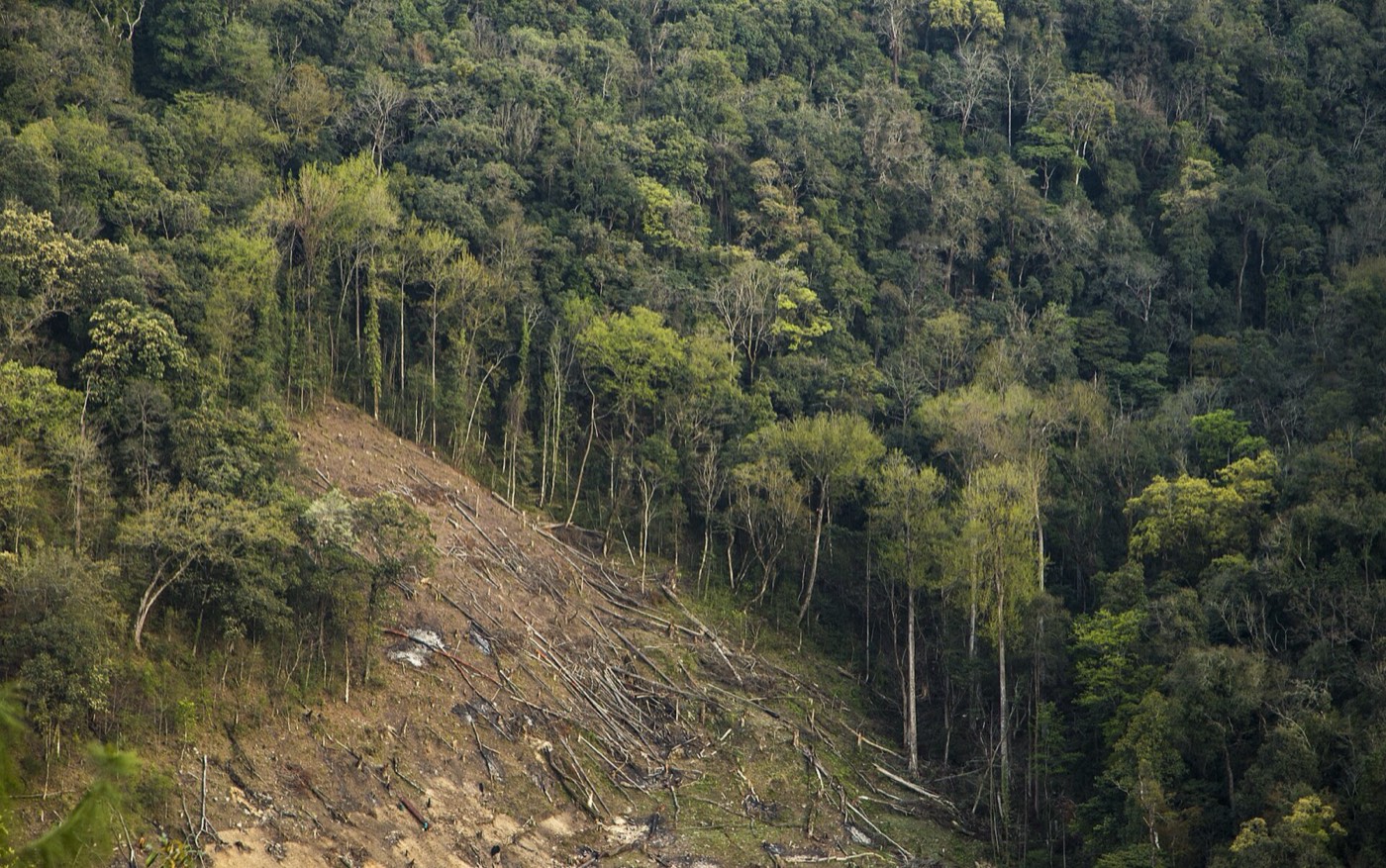
This is what a hillside looks like after its evergreen forest is felled.

Representative photo: Arunachal Pradesh. Saurabhsawantphoto, CC BY-SA 4.0
trees permitted to be felled0

Chapter 08 · The cut

Now, watch the forest.

This is a model of a forest plateau like the one at Saidongar, in Karjat taluka of Raigad district, about 15 km south-west of Bhimashankar sanctuary. Keep scrolling.

3,000 MW

Torrent Power is building a pumped-storage hydroelectric project here, estimated at ₹13,505 crore. Two reservoirs, tunnels through the hill, and water pumped up and let down to store power.

32,490 trees

Permission has been granted to fell 32,490 trees on 233 hectares (about 575 acres) of forest land. That's roughly 326 football pitches.

Water

The site lies in the valley of the Pej river, a tributary of the Ulhas, which supplies drinking water to towns downstream. Activists warn of water scarcity; the project cites a state hydrology certificate saying downstream users won't be affected.

Hillsides

Tunnel blasting in these hills worries locals who remember Malin (2014) and Irshalwadi (2023), villages buried by landslides in the Sahyadri.

A sapling is not a forest

Compensatory plantation has been promised. But a planted sapling is not a grown forest, with the soil, undergrowth, nests and canopy that took decades or centuries to form.

Chapter 09

What each side says

Facts matter more than slogans. Here's what has been reported, 24–28 October 2026.

Concerned citizens & opposition

  • MLA Rohit Pawar alleged that over 32,000 trees across 233 ha in the Saidongar forest near the sanctuary are being felled. He says he isn't against the project, only its location.
  • The Ulhas River Conservation Action Committee and the Hutatma Dilip Kapote Foundation say they are approaching the National Green Tribunal to stop the felling.
  • They demand public release of the EIA, wildlife-impact study and rehabilitation details, plus a joint study of landslide and water risk.
  • Activists say the public hearing was held outside the affected villages and announced late, and that gram sabhas passed resolutions against the project. When the clearance was recommended, the Forest Rights Act consent of Dhak's gram sabha was still pending.
  • Opposition leaders Aaditya and Raj Thackeray visited the site; within the ruling alliance, Sudhir Mungantiwar, Omraje Nimbalkar and NCP spokesperson Suraj Chavan also questioned the felling.
vs

Forest Department & State

  • The Conservator of Forests, Pune, said no illegal felling is taking place inside the sanctuary.
  • The department says the felling is legal, follows the approved forest-land diversion, and is in the Pali–Dhak area about 16 km from the sanctuary; 1,825 of 32,490 trees had been cut by 26 Oct.
  • On 25 Oct the Chief Minister called the project eco-friendly, said 90,000 trees will be planted, and accused opponents of a "fake narrative".
  • Torrent says all components are outside the sanctuary and its eco-sensitive zone, and that 253 ha of compensatory land has been handed over. Energy minister Meghna Bordikar and MP Ujjwal Nikam defended the project.
  • The Adani Group denied any link, saying it has no project in the area.

Our view: a forest doesn't stop at a boundary line. The sanctuary, the Saidongar plateau and its wildlife, rivers and hillsides are one Sahyadri landscape. Before a single more tree falls, the full studies should be public, the combined impact of all projects here should be assessed, and the people living there should be heard.

From the news Marathi & Hindi news reports · YouTube

Special report: "An axe on 600 acres of trees for Torrent Power"Saam TV · 24 Oct
Karjat felling: a 100-year-old tree, a 4-foot stump, and graveyard silenceMumbai Tak · 27 Oct
32,000 trees felled? What the Torrent project row is aboutBolBhidu · 25 Oct
Trees felled in the Karjat–Bhimashankar forest for an energy-storage project?ABP Majha · 24 Oct
Will Bhimashankar end? Why the felling? Development or destruction?Lokmat · 26 Oct
Protest against felling 32,000 trees near Bhimashankar Sanctuary (Hindi)Aaj Tak · 26 Oct

The petition

We ask the Government of Maharashtra to:

  1. Keep the current pause on felling at Saidongar until the studies are public and any legal challenge, including before the National Green Tribunal, is heard.
  2. Publish the full EIA, the tree-enumeration list, the approved Wildlife Conservation Plan, the forest-clearance orders, and the gram-sabha consents under the Forest Rights Act.
  3. Order an independent landslide, water-security and cumulative-impact study covering every pumped-storage project in the Pej–Ulhas valley.
  4. Consult gram sabhas and Adivasi communities, as the Forest Rights Act requires.
  5. Consider alternative sites or a closed-loop design that don't sacrifice Western Ghats reserved forest.

Add your name

Your name, city and (if given) email are stored securely as a record of the petition. They will not be made public and will only be used when the petition is submitted to the government.

Questions, information, or want to help? Write to bhimashankar@katyar.com

🌳 32,490 trees at stakeSign →